REVIEW: Mysterium (PC, iOS, Android)

I have an affinity for board games. Games like Lords of Waterdeep, Pandemic, 7 Wonders, and so on. When one of the games I enjoy get a videogame adaptation, I’m usually right on top of it. Some of the best adaptations include the iOS version of Lords of Waterdeep and Puerto Rico. Others, like Ra, aren’t as well translated. One game in particular, 7 Wonders, seems to be in an eternal beta.

However, one of the less likely board games to get a videogame adaptation is Mysterium. The game can best be described as a cross between Clue and abstract picture game Dixit. The theme of Mysterium is that one player is a murdered ghost, and the other players are psychics at a seance. The ghost sends the psychics clues related to their own murder, but the clues come in the form of wildly abstract pictures that Salvador Dali would be proud of. Using those vague clues, the psychics have six game turns to determine who killed the ghost, with what and where.
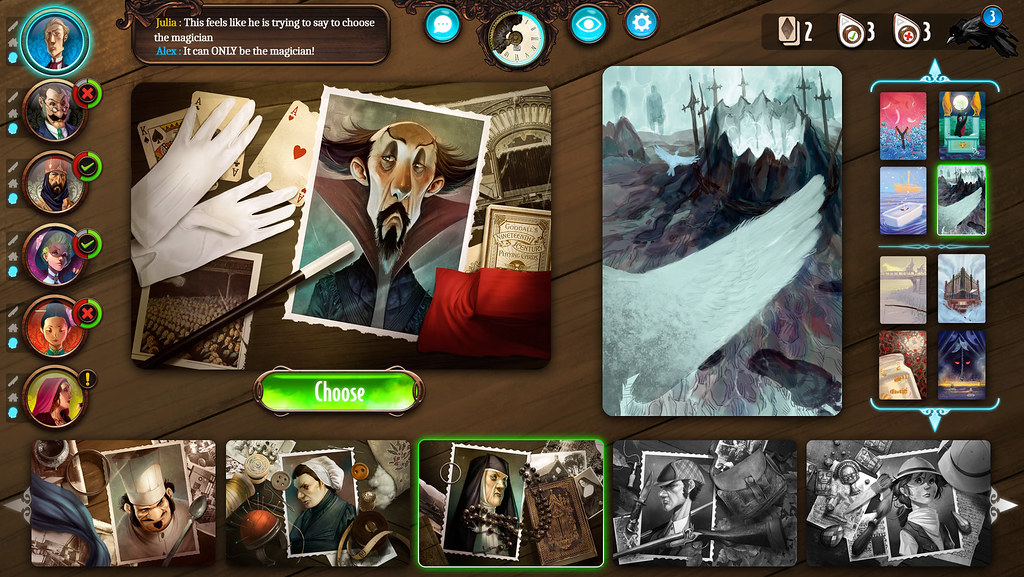
The game manages to represent the board game well, which lush, moody 1920’s art deco graphics. The single player campaign is basically an extended tutorial, framed in a story where the player spends time as both a psychic and a medium channeling a ghost. The game features multiplayer modes, including a Blitz mode that promises a faster game.

The game plays best with other humans, because playing with a computer requires the player to do a sort of reverse Turing Test in figuring out either what the computer ghost is trying to say or, even more difficult, figuring out how to find out what connections the AI will make. For example, putting 4 yellow cards may not influence the computer to select the yellowest option in front of them.

Playing with other humans is a pleasure, as always. A co-op game, you’re not going to find hostile players. The interface is good enough to allow players to communicate with each other, advising which evidence they should vote for or against. Mysterium is one of those games that never fails to present a compelling session.
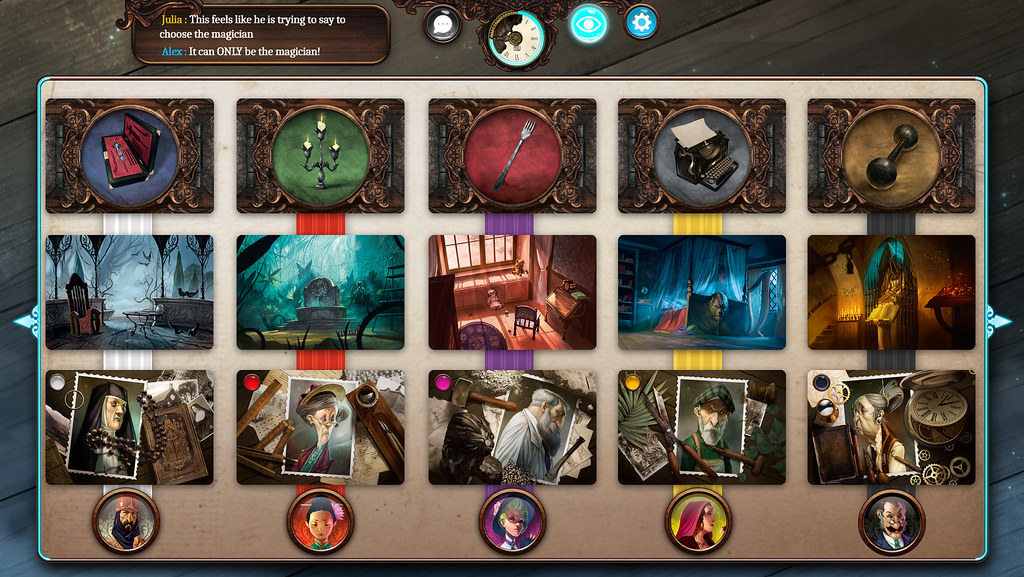
It’s unfortunate, then, that the population of Mysterium players is very low; matchmaking is poor, and it’s very hard to coordinate with strangers to start a game. Gamers are lucky to start four player games (1 ghost, 3 psychics), and the game really sings with far more psychics than that. Tn fact, I was never able to get a game of Blitz going.

For fans of Mysterium, this game is a must-buy, but it’s advisable for players to coordinate scheduled games to avoid the dearth of online players out there. The game is currently only available on PC, iOS and Android — hopefully, word of mouth will get more players to enjoy this faithful adaptation.


Leave a Reply

Your email address will not be published. Required fields are marked *

Related Post

Episode 371: This Podcast Is ExtremeEpisode 371: This Podcast Is Extreme

This week is another short one as the news is pretty light. However, there is another Gaming History as The Super Mario Bros. Super Show! is examined.

This week’s news includes:

  • Destiny‘s PVP mode now breaks up teams if they’re too good
  • Xbox One sold over 720K Black Friday week in the US
  • Godzilla The Game heading to North America this Summer
  • Street Fighter V revealed as a PS4, PC exclusive (from GameSpot)

The Question of the Week: “What is your favorite giant monster?”

Why Doesn’t iTunes Have Game Trials?Why Doesn’t iTunes Have Game Trials?

Nothing is more annoying than going into iTunes to see what video games are available for the iPod Touch and iPhone to find it cluttered with hundreds of duplicate games. Developers seem to find it most useful to release two games instead of one single game: a full version and a “lite” version.

itunesDevelopers know gamers want to try before they buy, so many will create a game they’re hoping to sell, then a limited “lite” version with partial levels or stripped of features. They’re obviously trying to work around the fact that Apple released a half-assed game shopping experience. These pro and lite versions assist in cluttering the shopping space.

iTunes App Store should allow users to trial a game by allowing them to download a neutered version of the game title or using a time-trial like many other downloadable game services. Electronic game downloads are usually non-refundable because you can never give back a product which you can make infinite copies. The solution to getting users to buy into your product is to allow them to try before they buy.

Apple’s obviously enjoying the immense game sales from the application store but they may be able to increase their sales by allowing gamers to see what they’re buying before they walk away empty handed. This would also limit the total products found in the App Store because developers won’t have to post to revisions to their game title to allow gamers to try before they buy them.

There are some obvious downsides, Apple wouldn’t be able to boast the thousands of products in their store because many would be substituted for a real game download system. Okay, that’s really the only download I can think of… any others?

Developers may opt out of a trial system, forcing gamers to buy it before they try it based on the text and screenshots or utilize a time trial or limited featured version.

Thoughts?

Small Games Make Big WavesSmall Games Make Big Waves

The game industry is doing “okay” in this bad economic time compared to other industries.  Primarily, Nintendo is rocking the house with their games, hand-held’s and consoles while mobile developers are showing some great successes in the industry. Many success stories in our industry are based on small titles, downloadable games of the more “casual” style while a few larger titles are experiencing slower than expected sales trends.

wiiwareWe’ve mentioned this in the past, but the tough economy gives many smaller developers great opportunities for success. While big publishers struggle to look good in the eyes of the investor, tiny developers can produce quality titles for minimal cash investment and time to market. Ten years ago, smaller developers tried to compete with the big boys making larger titles, cloning successful titles or simply asking investors to put it on the line for their game. Today, developers can create a small iphone app, a cute WiiWare title or exploit the XNA efforts of Microsoft for Xbox Live Arcade and actually have a chance.

There are still challenges with these smaller developers when working in the WiiWare and XBLA publishing channels, your game marketing and promotion becomes highly reliant on Nintendo, Microsoft or Sony for PSN. Tom Prata, senior director of Nintendo of America talked to Gamespot about this issue:

“Finally, there’s the problem of promotion. It’s not enough to make a great game if nobody notices it. Prata specifically said Nintendo will be devoting more resources to support the promotion and development of WiiWare games in the future.” (gamespot)

Of course, in the world of smaller game titles and downloadable casual games, you’re going to be at risk of finding a lot of “shovelware” — products that are only released to make a quick dime, often based on some license or popular theme/character. The great game titles will, hopefully, rise to the top and show themselves off amongst all the wanna-be money makers.

Those smaller developers putting a huge passion into their titles actually have a chance in this new industry trend. Game makers, internationally, now have a chance to grasp a small piece of the industry and make their dreams come true. The core audience may see this as a trend of noisly low quality titles, but I believe the industry needs this change to grow a new generation of developers based on niche interests.

While many can wait for their next release of Madden the rest of us will continue to spend a little money to see what the future innovators are going to be bringing to the table.