
Sony Should Buy Ubisoft and Here is Why

Sony’s been putting a lot of effort (read: money) into the PlayStation 3 product line with very little impact in the market. They’ve got this “10 year plan” but haven’t really executed a strong plan for their first two years of said plan. Sony’s plan seems to be “outlive the competition’s technology” while all of its competition stomps on their sales and market share with older and a bit “outdated” products.

Thus far there have been five spins of the PlayStation 3 hardware with price cuts only coming as a result of a “fire sale” of old hardware revisions. Sony, like many, believes the Nintendo Wii isn’t a direct competitor in their space; the outstanding sales of the Wii probably haven’t impacted the PlayStation 3 sales too much. The Xbox 360, however, has definitely cut them deep in all regions of sales.

Microsoft has built some unexpected momentum in Japan with Square-Enix making them a few console seller titles and the price cuts in Europe boosted sales over 200% all while the US continues to buy into the 360 hardware despite its most obvious red-ringing flaws. Microsoft has great partnerships with some fabulous companies, Bungie and Epic for instance, to build them exclusives that move even more 360 units.

Motorstorm is one of the PlayStation 3’s best games, selling over 3-million copies. While, as of January 2008, Halo 3 sold 8.1 million units for the Xbox 360. Now, Metal Gear Solid 4 has sold roughly 3.94 million copies since August of 2008 yet unsubstantiated rumors exist stating MGS4 could make its way to the 360. Combined awesome titles for the PlayStation 3 may not even exceed one of the competitors best selling products; where is the PS3 excitement?

Little Big Planet, Rachet and Clank, Resistance 2 and, someday, Massive Action Game (MAG) could produce some buzz around the PS3. By far, Little Big Planet has been the gold nugget Sony has been looking for and was published by Sony so they’re able to take full glory of this might-be console mover. What else do they have up their sleeve?

One or two blockbuster titles would compete well in a smaller market like last generation, but with Microsoft dragging in huge sales in all regions, Sony is going to need a real momentum killer. They’re already stating we’ll have no price cuts in 2008 leaving us asking, “why am I going to invest in a PlayStation 3?” Sony needs to figure out a long term battle plan and that involves blockbuster game titles which cannot be played on another console.

If Sony is willing to throw money out the window to keep the PlayStation 3 alive in this competitive market, why not spend it on their future? With a 10-year plan in place, that plan should involve picking up a company like Ubisoft. Ubisoft is a well respected public developer and publisher founded in 1986 and now consists of many well established smaller studios whom they’ve picked up along the way.

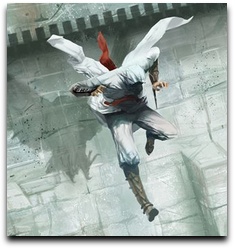
Ubisoft has some huge titles, Assassins Creed, Brothers in Arms, Ghost Recon, Splinter Cell, Rayman, Rainbow Six, Driver and has published many great titles for smaller studios. Imagine a Heroes of Might and Magic exclusive on the PlayStation 3 or a graphically intense exclusive Prince of Persia. Sony could steal titles away from the Wii such as Rayman and all his raving rabbids. Even 30% of these popular titles, being produced as exclusives for the PlayStation 3, could turn around this console.

Sure, Sony could pay for console exclusives on a handful of these great titles but, at this point, they’re going to pay out the nose to try to hold even a timed exclusive considering how many of these titles would arrive on the 360 in order for Ubisoft to recoup development costs for such a small PS3 audience.

Could Sony drive Ubisoft into the ground by limiting their exposure in the game industry to a single console? Indeed. There is always room for fatal errors when acquiring talent and executing them against your own 10-year plan. It would have to be a very aggressive attack with a very strong plan of execution in order to turn titles around on the PlayStation 3 in fast succession and with large PR hype.

Sony has shown they are willing to spend endless amounts of money all while turning their cheek to the obvious 360 domination. Why not take some of that money and re-invest it in the future of your 10-year plan by buying a company like Ubisoft before someone like EA does it first. With the huge market decline and the US bringing down the global economy, times may be ripe to grab a company and grow them to your own.

The real question would be, could Sony hold the talent at Ubisoft if they were to be purchased by such a large company with a sub-par sale standard console? Throw more money at the problem and bribe the talent to stick around for a few years and perhaps you’ve got a plan.

Leave a Reply

Your email address will not be published. Required fields are marked *

Related Post

Developer Wants License Keys For Console GamesDeveloper Wants License Keys For Console Games

UK developer David Braben from Frontier Developments believes smaller development studios are in the worse position when it comes to re-sale of “pre-owned” video games. Since a developer only gets their cut of the profits when a game is sold new, pre-owned titles allow gamers to play games without paying the developer for the effort.

This also hurts larger publishers, but they’re able to recover because of the sheer volume of games and game titles. One idea David had, was to code each game with a unique license key like a PC game that gamers must enter before playing. This would kill the ability to re-sell video games back to the market for others to buy at a cheaper price (translation: better value).

The future shows a higher degree of downloadable games, which cannot be re-used or sold back to the market, but for now, developers have to deal with pre-owned video games cutting into their profit. Presumably you could have a great game with smaller sales and a high degree of resale in the pre-owned market.

Problem with this take on development? Besides large scale video game sellers like GameStop making 80% profit margins on resold games (rather than a 10-15% on new), gamers want a way to make back some of their money on expensive titles. When you’re paying $60 for a game and you beat it in a week or two, you want to resell it so you can invest in a future title.

My theory… make games more affordable so we don’t feel gouged on the price. We may decide to hold on to it longer and tell our friends about it. A good game reference and a reasonable price will increase sales every time. Don’t try to solve pre-owned problems when the problem is the publisher and the industry making huge game prices.

(Thanks, Kotaku)

Gaming Flashback: MystGaming Flashback: Myst

Myst was published by Brøderbund Software, developed by Cyan Worlds and created by two brothers that did the design and directed the game (it was, much like a movie).

The original game was released on the Macintosh (in 1993) and then later ported to Microsoft Windows and Sega Saturn, PlayStation, Jaguar CD, AmigaOS, CD-i, 3DO, PlayStation Portable, and Nintendo DS.

Myst puts the player in the role of the Stranger, who uses an enchanted book to travel to the island of Myst. There, the player uses other special books written by an artisan and explorer named Atrus to travel to several worlds known as “Ages”. Clues found in each of these Ages help reveal the back-story of the game’s characters. The game has several endings, depending on the course of action the player takes.” (wikipedia)

The game was a success, no doubt, and was considered the best selling PC game of all time until TheSims dethroned it. Besides mind blowing graphics, at the time, Myst helped move the game and PC industry along by selling CDROM’s. The game required a CDROM, which was rare at the time, and I recall them bundling Myst with some CDROMS or hyping it as “you need a CDROM so you can play Myst.” On more than one occasion when a person game to me asking what they should get to show off their new (costly) CDROM I would say “you need to try Myst.”

The gameplay of Myst consists of a first-person journey through an interactive world. The player moves the character by clicking on locations shown in the main display; the scene then crossfades into another frame, and the player can continue to explore. Players can interact with specific objects on some screens by clicking or dragging them(wikipedia)

Franchise sales: 12-million copies (first Myst game alone in the franchise, 6-million), pretty impressive eh?

You don’t have to be a huge Myst fan to know how it changed the industry, grew the medium of CD-based games and entertained millions. A real gamers thinking game!

To hear our full impression of Myst, checkout the TD Gaming Podcast Episode 77.

Diablo 3, Finite Health and Loving ItDiablo 3, Finite Health and Loving It

Diablo 3 Lead Designer Jay Wilson sat down with Multiplayer Blog to explain how the health system works in Diablo 3 and how it differs from Diablo 2. In short, you can’t add a new feature without removing an old one, in this case we’re talking about health potions.

The goal is to broaden the Diablo audience to more than just the hardcore fans. Lets be honest with ourselves, the health potion system was way too far out of control (broken?) By mid-game or earlier, half the character inventory was full of potions and you might have just purchased shares in the potion selling company with all the spending you’ve done there. The health potion system created the infinitely powerful character, in essence, by making them immortal.

Activision Blizzard has learned a bit about their success with broad audiences in games like World of Warcraft, which has surpassed game sales over Diablo 2, their most successful game title. What they’ve decided to do in this release of Diablo is to limit the characters ability to heal and make them “mortal” again, requiring the player to use strategy, tactics and skills to defeat enemies. Rather than charging forward pressing “1” then “2” then “3” and the other hot keys for potions, you’ll be forced to back away during strong stomp attacks, mind your enemies special attacks and defend yourself.

“One of the things that happened in ‘Diablo II’,” Wilson continued, “was the player was faster than most of the monsters and had pretty much infinite health because they would just pop as many potions as they wanted. So when you have a player who has more mobility, more health and endless power, essentially the only thing you can really do to challenge [the players] is to kill them… by just spiking the difficulty.” (multiplayer blog)

Gating the users ability to heal is a classic RPG/Adventure game mechanism for changing the playing field in terms of difficulty. You can make a game with weaker enemies in abundance and still cause you harm, take a look back at Gauntlet in the arcade for an example of this method. You can build challenging enemy styles and dungeon traps to cause the player to mind their step, look at the classic Zelda series and some of their crazy enemies. A great example is the Darknuts from The Legend of Zelda, it was a small knight that could only be attacked from behind but had a sharp little dagger if you bumped them from the front. You had to use tactics to wipe out a full room of Darknuts.

Activision Blizzard will now have the option to create some fancy enemies with challenging special abilities that do not involve insta-kill upon contact battle tactics. You control a super hero character, not an immortal; there should be some challenge besides hacking and slashing through mobs of enemies. Wilson went on to say, “We can make a monster that affects your mobility, we can make a monster that has different kinds of attacks that are dangerous to you and that you actually have to avoid. And so it makes the combat a lot more interesting.”

One of the criticisms to the Diablo franchise has always been the “click fest” of battle. You sit still and click on enemies until everyone is dead. Perhaps, without having infinite potions you’ll be challenged to use your brain on occasion, like a real RPG and have more creative use of your money rather than investing a half-billion into the potion vendors.

Where does that lead the hardcore Diablo fans? Activision Blizzard hopes they’ll see a title with a lot more depth, a new style of challenge and a long term appeal.