
Sony, What Doesn’t Kill Them Makes Them Stronger

David Reeves, Sony Europe’s President said, “we simply have to suffer a little” when talking about the PS3, Europe and the competition. He was talking specifically about Sony’s loss of market share, mind-share and overall performance in the latest competitive console arena. While Sony’s president dismisses Nintendo as in a separate market, David Reeves said, “we’ve learned from Nintendo how to grow the market and move from hand-held device to device – they’ve done it brilliantly.”
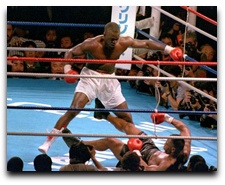
Buster Douglas Takes Down Mike TysonWhat Sony may be dealing with is the fact that they’re not top dog in the latest battle for consoles. Europe has taken to the PlayStation 3 better than the United States and they’ve got plenty of fans in the region. There has been a recent upside to it all, some light at the end of the tunnel:

“PS3 games sales are up 53% and there’s a healthy 1.1m pre-order book for Killzone 2, the first of a new batch of IPs that Sony will be counting on.” (guardian.co.uk)

Although it’s reported the PSP says are down 15% and PS2 software sales are down 51%, at least the PlayStation 3 is filling in the gap for some of those losses. At some point you’d expect the PlayStation 2 to decline, gamers are probably migrating over to the new hardware.

They’ve got some things to be proud of:

  • PlayStation Network increases revenues by 200% in 2008
  • 55% of all PlayStation owners are on PSN
  • 17.5 million PSN subscribers
  • 53% rise in software sales on PS3
  • Won HD format war

Unfortunately PS3 sales were down last quarter by about 9%, perhaps a response to the harsh economic times. And, of course, the fact that Sony’s VP’s are constantly defending their position in the market is a bit disconcerting. As David Reeves said:

“It’s like Ali v Foreman – go eight or nine rounds and let him punch himself out. We’re still standing, we’re still profitable and there’s a lot of fight in us. I don’t say we will land a knockout blow, but we’re there and we’re fighting.” (guardian.co.uk)

Sony is playing the defensive, guarding themselves against the punches of the competition. Nintendo making headlines for sales, Microsoft coming out of nowhere to try to build market share, while Sony holds out for the tenth round to win it in the end? We’re not yet sure if it’s Ali vs. Foreman or if Microsoft is the next Buster Douglas.

(Thanks, Guardian)
Leave a Reply

Your email address will not be published. Required fields are marked *

Related Post

3 Reasons Publishers Desire Us to Keep Old Games3 Reasons Publishers Desire Us to Keep Old Games

When we invest in a new video game we want to feel satisfied by the content supplied in the game, we want to know we’re getting our moneys worth in the investment. Publishers, on the other hand, want us to keep our old games so they stay out of the used market. A publisher does not make a dime on used game sales. Their primary weapon to stop game sales? Downloadable Content (DLC).

1. Publishers Spend Lots on Marketing

A great example being GTA IV, hardcore gamers have a short attention span and live on hype more than physical games. Today, games live in press releases, demos, cinematic and live gameplay footage at conferences and on the web. Then, a game hits the shelves and sells millions of copies for a week or two before it’s forgotten. Publishers have marketed their game well, spent thousands on conference booths, streaming video bandwidth and rushing game demos through development and testing cycles early to get eyes on their titles.

Let’s face it, gamers that scrambled to buy Grant Theft Auto IV have moved onto the next big title or have decided to go outside for some fresh air (probably the former). Hardcore gamers consumes games like candy, sells them off for store credit and works towards their next purchase.

2. Publishers Want Loyalty

DLC breaths new life into old games, making them remain valuable for months after the hype and excitement has died. We’re now spending USD $60.00 for some of these new “current generation” game titles for a few days or weeks of excitement. Free downloadable content brings new reasons to play our “old stale” games and allows us to feel comfortable about our 60 bucks spent on a title.

Rainbow Six Vegas 2 is receiving a new “Fan Pack” for gamers to re-energize themselves about the “old” sequel to Rainbox Six Vegas. A game released in March is considered old by gamers, probably rarely played on Xbox Live anymore and needs something to keep the fans interested. This helps build loyalty to your product so the next franchise title which is released has a better chance of being purchased by your fan base because they can look forward to additional free content in the future.

3. Publishers Hate Used Games

Publishers are helping stick those games in the hands of the gamers for a longer period of time by supplying free add-on packs. Why would you re-sell your precious title back to the store when you could hold it and wait for potential DLC?

Publishers receive no revenue from the resale of a video game so it’s in their best interest to keep it out of the used markets. If there is a chance your beloved game will receive new features, at no cost to you, wouldn’t you hold off from selling it to see what’s coming?

Once a gamer has sold their title to a retail chain for pennies they’re unlikely to re-buy the title with the typical 80% markup when DLC arrives. They may opt to borrow a friends copy or rent the title rather than re-purchase it; neither fair well for the publisher in terms of revenue.

Games are expensive. Consumers must be wise to the best value in their video game titles and publishers want you to choose them for your gaming entertainment. Competition is high, profit margins are low and the market is all about sales volume. Publishers want repeat customers, people who feel their games are valuable before and after the purchase and are willing to share their loyalties with others.

Do you collect old console games, or do you sell them off to game stores and/or eBay? Would you consider holding off a sale if there was a great chance of new downloadable content?

Episode 457: For HonorEpisode 457: For Honor

This week’s episode has T.J. raving about the new hotness, the multi-cultural action-MOBA game For Honor, while Jonah complains about the lack of attention paid to Plants vs. Zombies: Garden Warfare 2. Scott, meanwhile, is playing Pillars of Eternity in preparation for the sequel.

This week’s news includes:

  • Nintendo announces DLC Pass for Zelda: Breath of the Wild
  • Bard’s Tale remastered trilogy will be finished, promises developer
  • Sony axes PS Now for PS3, Vita
  • Microsoft teases Project Scorpio in E3 2017 press event

Let us know what you think.

Gaming Flashback: Yo! NoidGaming Flashback: Yo! Noid

Yo! Noid was a commercial opportunity for Domino’s Pizza developed by Capcom. This retro style game revolved around Domino’s Pizza claymation style mascot, the Noid, as he adventures through fourteen stages of side scrolling action.

The game sound was much like any other 8-bit action platformer. It reminded me of the original Teenage Mutant Ninja Turtles for the Nintendo Entertainment System, not the cool arcade one. Minus the turtles, Yo! Noid is a battle against Mr. Green, the Noids evil duplicate, a concept used in so many games; remember Shadow Link?

Unlike Link, Noid lost a life when he hit an enemy similar to the Super Mario Bros. style platformer but with a Yo Yo weapon. You could also gather smart-bomb type scrolls to clear the screen of all enemies, another classic side scroller arcade recipe. Yo! Noid brought nothing to the table in terms of uniqueness and relied on the standard recipe of side scrolling conflict.

This retro game may be one of the first true “total conversion mods.” Later we’d see Counter Strike born out of the Half-Life engine and way before that, Noah’s Ark 3D built out of the Wolfenstein 3D engine. Yo! Noid was a re-creation of the game Kamen no Ninja Hanamaru. Oddly enough, Yo! Noid was probably more well known than its forefather game because Capcom didn’t release Kamen no Ninja Hanamaru in the United States. Instead, we got Yo! Noid and a $1.00 off coupon on the back of the manual so we can get ourselives some Domino’s Pizza.

Although a few of us may recall Yo! Noid from our childhood, the title really didn’t create any huge waves in the game industry. Yo! Noid did show developers that a brand named product could be used as a marketing and brand awareness strategy, something we’d later see Burger King try on the Xbox 360 and find some success.

Can you tell the difference between Yo! Noid and Kamen no Ninja Hanamaru?