
 Gamers around the world have noticed a large trend in the video game industry in the last 15 years, massive growth with massive projects and unbelievable costs, goals and sales. We’ve seen the impossible become achievable in epic projects like World of Warcraft and huge sales figures from Halo 3 but we’ve also seen game titles fall down in a burning wreck.
Each studio tries to beat the next studio with crisp realistic graphics, real time physics engines, life-like explosions all with huge costs. Does it all sound familiar? If you’re a movie buff you’ve probably seen movie studios cranking out the same style of movie, high computer graphic effects with talented high priced actors making longer and longer films.
The only big difference? A game studio hires most of their talent for full time positions and then has to figure out what to do with them when the project ends. Perhaps this explains Microsoft’s effort to remove game studios like Ensemble, Bungie and FASA, it’s all too much to handle when a high budget project ships and time frees up in the studio.
Grand Theft Auto IV is said to have costs 100-million dollars to produce, how much of that was man power and specialized talent that now sits idle? Many studios end with layoffs as a congratulations for the hard work while bloggers and journalists write articles about the “downfall” and “destruction” of such a studio and share holders freaking because of drastic headcount reductions.
As projects continue to reach million dollar costs and specialized talent is brought in to handle computer graphics, movies, physics and lighting we’re looking more and more like we need to change how the game industry handles projects. Mark Pacini, Todd Keller and Jack Mathews, three core developers behind the Metroid franchise have struck out on their own all while thinking about the new formation of the game industry.
Mark Pacini told gamasutra, “the model in which games are made — with a staff of people upwards of 100 people a lot of the time — is kind of outdated now.” What’s the solution? Pacini said:
“Contractors now are being used more efficiently than they’ve ever been on game projects, and it’s become a more valid way to staff up your project. Rather than being looked down upon as a company that doesn’t want to hire somebody, it’s more fiscally responsible of the company to hire contractors, not to staff up and have a mass layoff at the end.” (kotaku)
Imagine a time where developers are contract-for-hire specialists in the industry, paid to do a project and move on to another project to handle the same style of work. The end result will be a lower-budget title with equal value to the game design because studios won’t have to pay benefits, handle layoffs, any potential walk-off “packages” and all the HR overhead that goes with hiring “part time” full time developers.
This diversity may spark new competition as small contract firms and individuals bid to get the deals they want and enjoy a good income for the work they do. Those that are aces in the field will stand out and be recognized for their accomplishments more than a simple entry in a scrolling game credit.
Unfortunately, this will mean that those awesome teams and studios that brought us hot titles will be a thing of the past. This will mean less iD Softwares, Epics and Square Enix’s as things becomes smaller groups of specialized workers. However, if it means the same quality titles with less risk to publishers and developers, we may get more hot titles than ever before without huge price hikes.
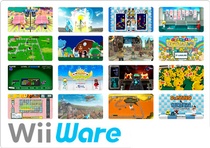 We’ve mentioned this in the past, but the tough economy gives many smaller developers great opportunities for success. While big publishers struggle to look good in the eyes of the investor, tiny developers can produce quality titles for minimal cash investment and time to market. Ten years ago, smaller developers tried to compete with the big boys making larger titles, cloning successful titles or simply asking investors to put it on the line for their game. Today, developers can create a small iphone app, a cute WiiWare title or exploit the XNA efforts of Microsoft for Xbox Live Arcade and actually have a chance.
Most mobile phone games are done via contractors who are hired by larger companies. Babaroga, for example, has made mobile version of a lot of Electronic Arts’ major titles (Spore, The Godfather , Kelly Slater’s Pro Surfer, SimCity, Splinter Cell: Pandora and Tony Hawk Pro Skater 4) as well as for Disney.
Most mobile phone games are done via contractors who are hired by larger companies. Babaroga, for example, has made mobile version of a lot of Electronic Arts’ major titles (Spore, The Godfather , Kelly Slater’s Pro Surfer, SimCity, Splinter Cell: Pandora and Tony Hawk Pro Skater 4) as well as for Disney.
Great article Derrick. I couldn’t agree with you more. The hiring tendency for game projects is exactly as you stated and can easily be avoided if studios kept a core staff and then just added supplemental Game Contractors as needed during the project. They will end up saving a great amount in tax filings, payroll tax and administration, bonuses, benefits, and much more. Not to mention that they will save their reputation from being included in the mix of studios that are bad-mouthed for their annual, predictable massive layoffs.
Our company, Ascendi Entertainment, is one of the few companies that is currently helping game studios to alleviate this problem. We have a full contractor management solution that provides Game Contractors to some of the top game studios. If anyone reading this is interested in our service or interested in becoming a Contractor in the game industry…you should check us out at http://www.AscendiEntertainment.com.
Great article Derrick. I couldn’t agree with you more. The hiring tendency for game projects is exactly as you stated and can easily be avoided if studios kept a core staff and then just added supplemental Game Contractors as needed during the project. They will end up saving a great amount in tax filings, payroll tax and administration, bonuses, benefits, and much more. Not to mention that they will save their reputation from being included in the mix of studios that are bad-mouthed for their annual, predictable massive layoffs.
Our company, Ascendi Entertainment, is one of the few companies that is currently helping game studios to alleviate this problem. We have a full contractor management solution that provides Game Contractors to some of the top game studios. If anyone reading this is interested in our service or interested in becoming a Contractor in the game industry…you should check us out at http://www.AscendiEntertainment.com.
I strongly believe in the model you’re advocating. That’s why I started Robotic Arm Software, a small contract firm specializing in tools development for game companies. We also see that contractor specialists are the wave of the future for game development. Check us out at http://www.roboticarmsoftware.com/
I strongly believe in the model you’re advocating. That’s why I started Robotic Arm Software, a small contract firm specializing in tools development for game companies. We also see that contractor specialists are the wave of the future for game development. Check us out at http://www.roboticarmsoftware.com/
Tools development? Do you just work on subroutines or develop whole games?
Tools development? Do you just work on subroutines or develop whole games?
@Jonah
We take on projects related to game development tools — editors for level design, UI, effects, cinematics, etc. For more info, email me at dan@roboticarmsoftware.com
@Jonah
We take on projects related to game development tools — editors for level design, UI, effects, cinematics, etc. For more info, email me at dan@roboticarmsoftware.com