

Believe it or not, there are many gamers that live outside the United States. Those of us that do not live in Japan and the US aren’t always a first priority for the entertainment industry when it comes to hot new releases, yet everyone feels the power of the marketing dollar… we’re just not all “privileged” enough to experience it on day one… or year one. Here is one such story, written by rover on of our forum posters, explaining how this leads to piracy in our global economy…
Let us pretend for a moment the best motion picture of the year ranked 10 out of 10 stars on imdb.com and was released in November 18th 2007. While the United States had access to the movie all year, distributors announced a European premiere on June 16th 2008. Months after North American the release, Europe may see this blockbuster movie in its region, leaving everyone to ask themselves, “how do I see this wonderful film now?”
The world isn’t as it once was. Years ago we found ourselves lining up on an early Saturday morning in the freezing rain just to buy a new CD or rent the latest movie on VHS. Today, people expect to get what thy want NOW. We see a spot during a commercial on TV for a new CD, movie or perhaps a TV show which spark our interest and what do we do? We can wait six days to watch the next hit TV show prime time episode or line up at CD MegaWorld Monday morning at 7am to buy the CD, or we do something entirely different: we go online. Most of us would go to amazon.com to find that excellent new artist, or perhaps itunes.com to find the latest episode of our favorite TV show.
Online is the way to go. We don’t mind paying for quality entertainment; the only thing we ask is to get some flexibility to our time schedule. Some of us may watch our hit prime time TV show at 1 AM or listening to our favorite music on the bus at 5 AM. The question is “can I?” and the answer is, “yes you can!”
Now here’s where problems arise. The “yes you can” statement only applies to one group of people, specifically the North Americans. You watched this seasons first episode of “Lost” on TV, you can go online and find out there are three full seasons of 22 episodes already aired. Great! Now all I must do is pay up roughly USD $1 per episode and I’ve got the ability to download all episodes and watch them at my own leisure… right?
According to some folks, the biggest entertainment market is video games. This is where the #$%& hits the fan! Some of the mayor distributors, *cough* EA *cough* thinks it’s a great idea to turn a blind side to the reality facing the movie industry by releasing their games on a schedule. This so called “schedule” really defines the date set for North America. Great! Just go on xbox.com and search for the release date of Rock Band 2 and you’ll find the target date for September 2008. What is the release date for the rest of the world? No information found.
Let’s turn the clocks back a year, EA released Rock Band for the 2007 holidays in the United States. When did the rest of the world see it? The UK, France and Germany received Rock Band in late May 2008 while Sweden, Italy and a handful more countries had the title in late July 2008. Norway and a few other countries got a silent release of Rock Band in September 2008! A full 10-months after the US released the hot new franchise, just in time for Rock Band 2’s release in the US!! I can see why, initially, this was a good idea; EA had time to iron out the hardware problems that arose in the US and sorted them out before going global… but… one year later?
Now back to the piracy issue… and if you’re American, this is going to shock you.
Let us look back at those TV shows. Until 1992, there was only one TV station in Norway. In 2006, the number was up to four; I bet you know there’s more quality content out there to fill up the prime time “airwaves” 250,000 times over. But, we’re in a global economy now, right? Just buy whatever you want online. Now here’s the shocking truth; lets say, for arguments sake, I’m interested in the show The Terminator – The Sarah Connor Chronicles, but the show never aired in Norway. What do I do?
The first thing I did was to check Xbox LIVE for downloads but the only thing available is the trailer for the first Pirates of the Caribbean movie. Next thing was iTunes, yep they’ve got it. Can I get it? NO! Bare in mind, I don’t mind paying for the entertainment I consume, but this is ridiculous. For me to download an episode of The Terminator – The Sarah Connor Chronicles, I first need to visit ebay.com and buy an American iTunes redeemable card, then I got to register with an online service like jetcarrier.com to get an American c/o address. Now, I need to sign up with iTunes through a proxy server, which fake my IP so it looks like I’m using an American ISP. After signing up, I cannot use my VISA card to pay for content, because my billing address is outside the US. This is where the redeemable card purchased on ebay comes in handy. Well, after a week, I’m finally able to legally pay for the content I want.
Wouldn’t it be easier and hassle free just to download the same content illegally? I would have gotten an episode in a few minutes on my 20 mbps internet connection.
In the realm of video games, Activision is on the right track. They seem to be releasing games worldwide within four weeks. This is true for CoD4, Guitar Hero 3 and GH:WT. What is EA doing? Releasing a highly awaited game like Rock Band 2 in the US, without any specific date for the European market. Now here’s the interesting thing that’s happening over here; people are buying new Xbox 360 consoles, modified NTSC (North American) boxes, just to be able to play the games. Of course, the games are illegally downloaded through popular torrent sites who have the games available now, months before the publishers commit to our region for a legal copy. These same individuals will probably not purchase the real game when it eventually comes out over here as they’ve played it enough. These same people would rather buy games for their European PAL boxes had they been available quickly after the titles initial release and press hype.
I could, of course, go on about other games released by EA, like the Medal of Honor and NFS series and Spore.. not to mention DRM methods, but that’s for another rant…
(source: gamingpodcast.net/forum)
 Like a washed up superstar, Grand Theft Auto IV continues to drop in NPD figures. This
 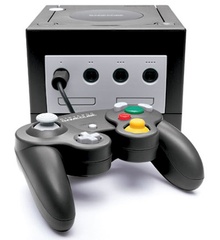 Before Sony fans unite to comment storm, remember, the PS2 had a lot of great games and continues to have games coming through for its console. People are still debating the life-span of the Wii product line, regardless to overall sales figures while the PS2 no doubt had a long live and still continues to have a long life, heck 30%+ of gamers still play the darn thing. Sony has been able to utilize the PS2 and its profitability to glide through the initial PS3 sales slump and get the momentum growing for their current generation console.
With regards to TV and movies, I for one do not care. I realized a long time ago that american moviecompanies and american television producers don’t give a rat’s ass about europe or other parts of the world. They make movies and TV series for the home audience. If they make a little extra cash selling the series abroad or get some revenue from the box office in Europe, that’s just a little extra gravy to them. Maybe I’m just jaded or something, or just gave up fighting the inevitable, but that’s the situation.
Games however, are a whole different matter, and I whole heartedly agree with everything you said, though I would not be so narrow as to single out EA alone.
So keep releasing stuff half a year later in one part of the world, and keep seeing masses of people pirating your releases….
Yeah, you sound a bit Jaded. I’m not sure if they feel our shows wouldn’t have a great impact abroad due to cultural differences and such, but still.
There are plenty of neat shows on BBC that I’d love to see but we never bring them here… we ‘reproduce’ them with new actors and hope they work (ie. The Office)
The thing is, with our current global economy you’d think they’d jump on the chances especially with online TV show websites and such, like hulu.com and others. Giving everyone a chance to be attached to our entertainment industry here in the States.