
When I was a little boy gamer I would spend a bit of my allowance on Electronic Gaming Monthly a great little gaming magazine. Unfortunately, young gamers will never understand what the industry was like twenty years ago. In a time before the Internet, the only place to get gaming news for a young kid was a glossy magazine. Today, EGM closes its doors and we’re losing a historic piece of gaming history.
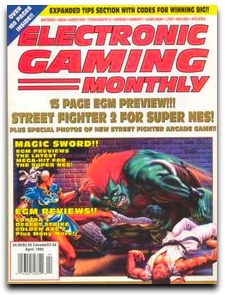 Granted, there were other glossy magazines prized by young boys too, but we were old enough to purchase Electronic Gaming Monthly, now known as EGM by the hip and cool. Although EGM was founded in 1989, many adults between the age of 29 and 35 probably spent their youth flipping through the pages reading the reviews and editorials.
The days of the magazine are drawing to an end for many industries, with video game websites covering everything from truly hardcore to highly niche, we all demand our information as soon as possible. If a company like Ziff Davis is selling its properties, we want to know the minute it is announced, when 1UP is purchased by UGO we want to know the minute the ink dries. Why? Because we can.
January 2009 marks the last issue of Electronic Gaming Monthly. After Hearst Corporation (owner of UGO) purchased 1UP from Ziff Davis it was announced that EGM would be seeing its last issue. Sure, there was a chance this would occur without the acquisition as well but the sadness wouldn’t be any different. We’re sure the staff will find a great home writing for another publication or in the online world, but it is sad just the same.
Along with the sad news of EGM closing, we’ve heard a number of folks at 1UP have also been effected by Hearst Corporations purchase of 1UP which has many people out of a job during tough economic times. There has been rumor the 1UP podcasts being ditched as well, but we have heard nothing official yet (please comment with official stories if you hear).
Of course, 1UP is “officially” rejoicing at the news but we know this is part of the “smoke and mirrors” that is an acquisition. A few, now former, 1UP folks have been using twitter and game forums to voice their own “opinions” of the purchase.
This is a rough economic time for many people, printed magazines, online publications and others. The only shining light is knowing many of these individuals will find new places to call home or start brand new online publications to compete against their old company. Talent will not go restricted, they will no doubt group together to form new aged publications to show off why the big boys are flailing in the dark.
We wish them all well in their efforts to find success.
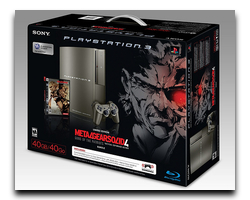 Metal Gear Solid 4 was a solid release for the PlayStation 3, the exclusive title that gives Sony an edge over the competition. This was Sony’s Halo 3 title and it needed to be a big success in order to keep gamers confident in the Sony brand.
 Sony’s been putting a lot of effort (read: money) into the PlayStation 3 product line with very little impact in the market. They’ve got this “10 year plan” but haven’t really executed a strong plan for their first two years of said plan. Sony’s plan seems to be “outlive the competition’s technology” while all of its competition stomps on their sales and market share with older and a bit “outdated” products.
Aw, man. Haven’t read EGM in a while, but I will miss the old 1UP.
I also like how in the article UGO refers to the absorption and subsequent diminishing of other companies as “growth.” Yeah, perhaps in the same sense that Audrey II experienced growth. ‘:P
Aw, man. Haven’t read EGM in a while, but I will miss the old 1UP.
I also like how in the article UGO refers to the absorption and subsequent diminishing of other companies as “growth.” Yeah, perhaps in the same sense that Audrey II experienced growth. ‘:P
It started for me when Computer Games Magazine was shut down even though it was still healthy.
It started for me when Computer Games Magazine was shut down even though it was still healthy.
UGO didn’t fire anyone – the closing of EGM and the firing of staff was all Ziff-Davis.
UGO didn’t fire anyone – the closing of EGM and the firing of staff was all Ziff-Davis.