 Apparently the war is in full force and Microsoft’s Don Mattrick is ready to poke the flag in the ground and call it a sure fire victory (in so many words). He said he’s “willing to declare here today that Xbox 360 will sell more consoles worldwide this generation than PS3” (eurogamer)
They’re either not seeing the Wii as a competitor or are trying to avoid that evil word considering the growth of the tiny little console in the market. After telling the audience the Xbox 360 has already outpaced the PlayStation 3 and Wii he failed to mention the one-year head start the 360 had over its competitors.
There are, of course, bonuses to talking figures when you were first out of the gate. The interesting facts, which won’t present themselves for years now, will be the end unit sales figures for Wii, 360 and PlayStation 3 when all boxes are end-of-life’d. We’re sure to hear each side declare victory when they’ve decided when the war actually ends. In Microsoft’s eyes, the console war will probably end when they release the next-generation box, barring the fact that they should wait at least one year before claiming the title.
You can’t argue with the facts, Xbox 360 is doing very well in the United States (if we ignore Japan). The Nintendo Wii has sold 8.8 million units to the Xbox 360‘s 10.3 million units. How many units did the Xbox 360 have sold around the same time Nintendo boasts 8.8 million? Probably a bit less.
Press can be a great thing when you have numbers to play with and figures to skew. Oddly enough, if some of us are any indication, we’ve purchased multiple Xbox 360’s because of dead systems. Sure, we’re stupid for actually doing it, but those figures will work into the total units sold for the Xbox 360 hardware sales. Imagine, their failing systems may have actually boosted sales figures a bit; probably not statistically significant but funny non-the-less.
We can’t wait to see what type of numbers Sony and Nintendo are going to fling out. If we ask each competitor, we’re sure they’ll say we’re going to win the console war. Nintendo may just ask, “what console war? We just make game hardware” and you can’t fault them there!

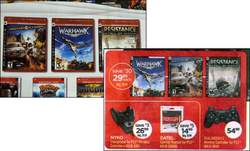 It’s that time in the life-cycle of the PlayStation 3 where a few of their hit titles go into “classic” game mode, which translate to a price drop. We saw this with a few games like Kameo on the Xbox 360 a year or so after the launch of the console.
0 thoughts on “First PlayStation 3 Greatest Hits Games”