
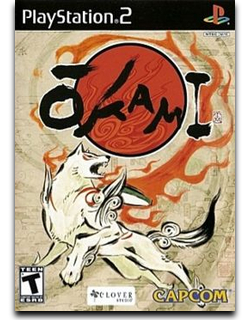
Are You An Okami Fan?

PlayStation 2 fans may recall a little title called Okami, it’s an action adventure game developed by Clover Studios and published by Capcom. The original Okami title received fairly high reviews by many popular game sites, although there were a few flaws, the receiption seemed well received.

Clover Studios was closed after the release and all the intellectual properties went back to Capcom, the company that funded the studio, leaving Capcom responsible for future sequels.

Christian “Sven” Svensson said “I think we need a lot more people buying the current version before we seriously consider a sequel”. A harsh statement on the game’s combined sales figures, perhaps, but also probably an accurate one. (Kotaku)

This is the sound of a developer not so happy with prior performance and finding it too risky to try for a second title. Although many sequels outshine their parents there is some truth to the fact that slow selling parents will create slow selling sequels, there is something to be said about learning form past experiences.

The game had good reviews, isn’t it worth trying to make a second game based on that? Maybe people just aren’t jazzed about Japaense folklore, myths and legends as the basis for a game.
0 thoughts on “Are You An Okami Fan?”

Leave a Reply

Your email address will not be published. Required fields are marked *

Related Post

Episode 465: No FrillsEpisode 465: No Frills

This week’s episode is raw and unedited, since Jonah’s laptop got fried. However, despite the audio issues and being posted via cell phone, the gang got off a pretty good show.

This week’s news includes:

  • Overwatch pro ends career with stream of racial slurs
  • Don’t expect Kingdom Hearts 3, Final Fantasy 7 remake until at least 2018
  • DOTA 2 will soon require competitors to cough up their phone number
  • Report: PlayStation VR bundle will come with required camera and one Move controller

The Question of the Week: “What kind of VR game would you want to play?”

Evolution of RPG’s – Gamers Don’t Want an End?Evolution of RPG’s – Gamers Don’t Want an End?

I remember a day when old RPG games had either a level cap or a definite ending. From Pool of Radiance to Secrets of the Silver Blades to Final Fantasy the game had a final boss or stage and often had some type of level cap. Today, gamers don’t want it to end, they’d rather have the option to wonder around aimlessly or completing minor quests in order to soak up every ounce of money they spent on the title.

linkNow even Bethesda is saying “we’ve learned our lesson” from the whiplash of ending their game title and capping levels. Gamers want to go back and re-try content they missed, they want to run side quests and talk to everyone in the world they want to grind themselves to über powerful levels and become a god in their fantasy world. Can you blame them?

You can’t really blame them for wanting to maximize the content, although it’s slightly more evolved than RPG’s of old. Perhaps it was World of Warcraft and other MMORPG’s that brought us to the stage in life where we all want to squeeze every last RPG dime out of the title. As a kid I wondered the world of Hyrule and covered every tile of graphical color, burned every bush, bombed every stone looking for all the content. However, even Zelda had an end with scrolling credits – you didn’t just land on a platform with your master sword and a dream.

Other titles have used level caps to limit you and draw you into the next release of the game. This was popular in the D&D world because the game is designed to target specific levels of difficulty. They may only allow you to gain level 10 because the enemies are no tougher than level 13, allowing the challenge to be good but not overwhelming. If they allow you to get to level 50 they’d have to design the game so all the enemies grow powerful along with you — that’s not always a desired result.

Final Fantasy is a popular franchise that typically allows you to grow infinitely powerful depending on how much time you want to spend repeat killing the same enemies. Gamers aren’t always into the grind, they just want to grind “enough” to make the challenges a little more do-able.

Today, however, with larger storage capacity, larger development teams and the desire to build more value into your gameplay experience titles have dozens of side quests and sub-plots that are totally optional. The result of so many sub-quests results in a player who is much more powerful at the end of those quests compared to a player who sticks to the narrow path of the main plot. So, games much grow dynamically challenging to keep the fun per dollar high.

Do you like your RPG’s to have a definite end and a high but capped level?

Episode 394: Paul Bravely DefaultsEpisode 394: Paul Bravely Defaults

Paul is back from being deathly ill, and joins a half-asleep Jonah and Scott, where he and Scott try to have better timing. There’s no Gaming Flashback this week but plenty of weird news.

The list of news items include:

  • Disturbing portrait of Konami corporate environment alleged
  • Deus Ex: Mankind Divided: player choices more impactful, boss fights optional
  • ZombiU drops the “U,” preps for August launch on PC, Xbox One, PS4
  • Fallout 4 fan releases schematic for 3D printed Pip-Boy
  • Vote to play coming soon for PS Plus members
  • Hitchhiking robot is decapitated, left in a ditch

There’s a new Question of the Week that wasn’t going to be the Question – listen and find out what it is.