
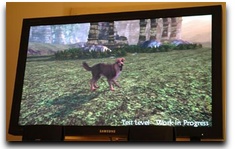
Xbox 360’s Fable 2: No Online Co-Op In Box

Much like Kameo: Elements of Power, Fable 2 ships without online co-op mode on day-one. However, Kameo didn’t promise the co-op mode prior to the games release, or talk about it in their presentations and hype machine conferences.

How does that happen? It’s easy to promise a feature but words do not make games true. More than likely the online co-op was a bit more complicated or had some bugs that needed to be shaken out prior to shipping. Microsoft is talking about releasing a patch for the new co-op play on the first week or so of the game release.

There are two options: ship a product that’s buggy and deal with the online PR nightmare with bugs and day-one patches, or, ship it without the feature and promise it early in the launch phase of the game. Once the code is complete, game software has to go through the packing, duplication and shipping phase. A lot of last minute testing can get done in the time it takes to produce the boxed product.

Hopefully Microsoft is doing some last minute testing to make a more reliable presentation of online co-op which everyone can use. However if it releases with a bunch of bugs…

(Thanks, GameSpot)

0 thoughts on “Xbox 360’s Fable 2: No Online Co-Op In Box”

Leave a Reply

Your email address will not be published. Required fields are marked *

Related Post

Nintendo Wants More Wii and DS SalesNintendo Wants More Wii and DS Sales

At E3 Reggie Fils-Aime let the world know he wasn’t satisfied with the sales progress of the Wii or DS in 2007 and hopes Nintendo can do better this year. Perhaps Nintendo is playing the humble card? No doubt they bragged about their 10 million sales of the Wii and 20 million sales of the DS but quickly followed it by saying they’re not satisfied.

Or, is this a threat?

Nintendo has built some steep competition while both Sony and Microsoft scoff at their product and tell everyone its a novelty and it doesn’t really “count” in this next-generation console battle. It doesn’t count… really?

Perhaps Microsoft and Sony are right; maybe every Wii owner that wanted a PlayStation 3 and/or an Xbox 360 purchased their console too. There may be some truth to that as hardcore gamers may purchase a Wii for many reasons:

  • They want every console so they have the widest array of game purchases
  • They’re hardcore nature forces them to spend money on all products
  • They want to get their kids in on gaming early, to grow them up in their image
  • Mob mentality, if everyone has a Wii you must as well!
  • The technology is cool and you want to be there for its inception

It seems they don’t feel a threat because Wii is a non-gamer console and thus attracts a different crowd… yet they’re both mimicking some of the motion sensing in their own controllers and playing nice towards “casual games” and non-gamers of late. Maybe their not threatened, but impressed?

Fils-Aime isn’t impressed with their sales figures, perhaps because he expected a higher degree of Wii sales by now, but the fact that people cannot purchase them two years into production has hurt sales figures. Although 10 million units sold is an impressive figure, knowing you had such higher potential if the product was actually on the shelves has to hurt a bit of your pride.

The DS sales were impressive considering the product has been in the market for awhile and is easier to find (minus the holiday rush). We’re not sure why he’s not satisfied with the figures, but inspiring a higher degree of DS sales will require some work. Perhaps this is why they’ve gone with the GTA Chinatown approach; using the GTA name to grow their DS sales figures?

It will be interesting to see how Wii does through the next few quarters and if sales slow down now that we’re a few years into the product. What was the last home console Nintendo owned to get this high of a demand?

Perhaps none.

Evolution of RPG’s – Gamers Don’t Want an End?Evolution of RPG’s – Gamers Don’t Want an End?

I remember a day when old RPG games had either a level cap or a definite ending. From Pool of Radiance to Secrets of the Silver Blades to Final Fantasy the game had a final boss or stage and often had some type of level cap. Today, gamers don’t want it to end, they’d rather have the option to wonder around aimlessly or completing minor quests in order to soak up every ounce of money they spent on the title.

linkNow even Bethesda is saying “we’ve learned our lesson” from the whiplash of ending their game title and capping levels. Gamers want to go back and re-try content they missed, they want to run side quests and talk to everyone in the world they want to grind themselves to über powerful levels and become a god in their fantasy world. Can you blame them?

You can’t really blame them for wanting to maximize the content, although it’s slightly more evolved than RPG’s of old. Perhaps it was World of Warcraft and other MMORPG’s that brought us to the stage in life where we all want to squeeze every last RPG dime out of the title. As a kid I wondered the world of Hyrule and covered every tile of graphical color, burned every bush, bombed every stone looking for all the content. However, even Zelda had an end with scrolling credits – you didn’t just land on a platform with your master sword and a dream.

Other titles have used level caps to limit you and draw you into the next release of the game. This was popular in the D&D world because the game is designed to target specific levels of difficulty. They may only allow you to gain level 10 because the enemies are no tougher than level 13, allowing the challenge to be good but not overwhelming. If they allow you to get to level 50 they’d have to design the game so all the enemies grow powerful along with you — that’s not always a desired result.

Final Fantasy is a popular franchise that typically allows you to grow infinitely powerful depending on how much time you want to spend repeat killing the same enemies. Gamers aren’t always into the grind, they just want to grind “enough” to make the challenges a little more do-able.

Today, however, with larger storage capacity, larger development teams and the desire to build more value into your gameplay experience titles have dozens of side quests and sub-plots that are totally optional. The result of so many sub-quests results in a player who is much more powerful at the end of those quests compared to a player who sticks to the narrow path of the main plot. So, games much grow dynamically challenging to keep the fun per dollar high.

Do you like your RPG’s to have a definite end and a high but capped level?