
NXE, Theme Packs, Avatars and Impressions

We’ve had some time to look through the New Xbox Experience (aka Fall Update 08) for the Xbox 360. There are some goods, bads and oddities about the latest updated firmware and thought it was a good time to share.
The most important feature we’ve found with the new console software is the addition of Netflix. The ability to play software in the “Instant Queue” is excellent, fast and done with high quality. If you have children this may be one of the must-have product features; add a ton of family movies to the Netflix Instant Queue and your children will have hours of entertainment.

We’re not telling you to sit the children in front of the TV for ten hours, but it proves to be a great way to get quality entertainment without bombarding them with commercials telling them to tell you they need new stuff. This is especially true around the holidays where kids are watching more commercials than actual episodes of Sponge Bob Square Pants.

We were a non-Netflix household and recently bought into their second tier program so we can watch instant shows and get one DVD at a time. The NXE has up-sold at least one new Netflix customer, great job Microsoft!

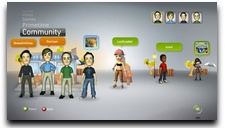
Avatars are another “feature” to the new console software and it all seems very Wii like. Months ago we were kidding about how they’re cloning some features of the Wii but in reality, it’s more a clone than we thought. The sound track while creating your Avatar feels almost ripped from the Wii in terms of cute settling sounds and silly uplifting music. This isn’t your dad’s console anymore Timmy.

The outfits to dress your Mii, oops, avatar in are very limited and you’ll no doubt see a lot of sameness in dress and overall look to the avatars. But, now Microsoft is showing us how to differentiate ourselves by purchasing virtual items to make our avatars cooler. For 250 Microsoft points you can now buy a Ninja Blade theme pack which includes wallpapers and avatar items. Yay. No, seriously, we’re supposed to buy this crap?

The NXE also supports a full system re-design, out with the blades in with the… Cover Flow? The NXE now acts more like iTunes, the iPod and the Apple OS X more than ever. You’ll breeze through your game list, NetFlix Queue, Friends List and other features as if it were Cover Flow album art. Cool in some ways, frustrating in others.

In some ways, item lists are the fastest and easiest ways to view things. For instance, prior to NXE you could tell who was online in your friends list within a few seconds. Now, with NXE you’ll troll through your friends list four-by-four flying through the “art” of your friends avatars hanging out next to a “room” mimicking the game they’re playing. Cute, no doubt, but not an effective way to see who is online.

The in-game console pop-up windows are much cleaner and easier to browse using a mini-blade style approach to finding information. This new re-design allows you to get more from your console interface while in-game than ever before.

The one neglected feature, in my humble opinion, is the “spit and polish” of the new interface. They took some aspects of OS X and some aspects of Wii and mixed them together to make organizational changes, some good and some bad. However, the interface is very flat, drab and boring. There is no real glossy shine to anything, very little in textures for backdrops and windows fixtures and very anti-vista like when it comes down to drop shadows and beauty. A little more glamor, gloss and reflective surfaces would have made the interface look a bit more next-generation in terms of cool factor.

Overall, it is what it is. You may like it, hate it or just learn to live with it. Some features will be easier to browse around while others will require a bit more work. We’ve noticed about a 10 to 12 second pause between shopping screens for add-ons, arcade game downloads and such, hopefully that will change in the coming weeks. It stands out as a bit different from the competitors, in some aspects, while paying tribute to some of the cooler features of other products.

The Netflix addition is the best part of NXE, but that could have come available without a full user interface redesign. Your thoughts?

0 thoughts on “NXE, Theme Packs, Avatars and Impressions”

  1. The Netflix service is f’ing awesome. I prefer the miniblade navigation to the main X/Y nav they have, but I can see where it’ll appear to more casual users.

    Installing games is also cool.

Leave a Reply

Your email address will not be published. Required fields are marked *

Related Post

3 Reasons Publishers Desire Us to Keep Old Games3 Reasons Publishers Desire Us to Keep Old Games

When we invest in a new video game we want to feel satisfied by the content supplied in the game, we want to know we’re getting our moneys worth in the investment. Publishers, on the other hand, want us to keep our old games so they stay out of the used market. A publisher does not make a dime on used game sales. Their primary weapon to stop game sales? Downloadable Content (DLC).

1. Publishers Spend Lots on Marketing

A great example being GTA IV, hardcore gamers have a short attention span and live on hype more than physical games. Today, games live in press releases, demos, cinematic and live gameplay footage at conferences and on the web. Then, a game hits the shelves and sells millions of copies for a week or two before it’s forgotten. Publishers have marketed their game well, spent thousands on conference booths, streaming video bandwidth and rushing game demos through development and testing cycles early to get eyes on their titles.

Let’s face it, gamers that scrambled to buy Grant Theft Auto IV have moved onto the next big title or have decided to go outside for some fresh air (probably the former). Hardcore gamers consumes games like candy, sells them off for store credit and works towards their next purchase.

2. Publishers Want Loyalty

DLC breaths new life into old games, making them remain valuable for months after the hype and excitement has died. We’re now spending USD $60.00 for some of these new “current generation” game titles for a few days or weeks of excitement. Free downloadable content brings new reasons to play our “old stale” games and allows us to feel comfortable about our 60 bucks spent on a title.

Rainbow Six Vegas 2 is receiving a new “Fan Pack” for gamers to re-energize themselves about the “old” sequel to Rainbox Six Vegas. A game released in March is considered old by gamers, probably rarely played on Xbox Live anymore and needs something to keep the fans interested. This helps build loyalty to your product so the next franchise title which is released has a better chance of being purchased by your fan base because they can look forward to additional free content in the future.

3. Publishers Hate Used Games

Publishers are helping stick those games in the hands of the gamers for a longer period of time by supplying free add-on packs. Why would you re-sell your precious title back to the store when you could hold it and wait for potential DLC?

Publishers receive no revenue from the resale of a video game so it’s in their best interest to keep it out of the used markets. If there is a chance your beloved game will receive new features, at no cost to you, wouldn’t you hold off from selling it to see what’s coming?

Once a gamer has sold their title to a retail chain for pennies they’re unlikely to re-buy the title with the typical 80% markup when DLC arrives. They may opt to borrow a friends copy or rent the title rather than re-purchase it; neither fair well for the publisher in terms of revenue.

Games are expensive. Consumers must be wise to the best value in their video game titles and publishers want you to choose them for your gaming entertainment. Competition is high, profit margins are low and the market is all about sales volume. Publishers want repeat customers, people who feel their games are valuable before and after the purchase and are willing to share their loyalties with others.

Do you collect old console games, or do you sell them off to game stores and/or eBay? Would you consider holding off a sale if there was a great chance of new downloadable content?

Gaming Podcast 113: How Do You Say Gyro?Gaming Podcast 113: How Do You Say Gyro?

This week we’re overwhelmed with awesome listener comments, including new ones from folks we’ve never heard from on the show. We’re also taking a flashback look at the original Diablo and some of the sequels that followed it. This weeks gaming news includes:

We’re also reviewing the downloadable content for GTA IV known as “Lost and the Damned.” Learn why Derrick is afraid of Motorcycles.

Evolution of RPG’s – Gamers Don’t Want an End?Evolution of RPG’s – Gamers Don’t Want an End?

I remember a day when old RPG games had either a level cap or a definite ending. From Pool of Radiance to Secrets of the Silver Blades to Final Fantasy the game had a final boss or stage and often had some type of level cap. Today, gamers don’t want it to end, they’d rather have the option to wonder around aimlessly or completing minor quests in order to soak up every ounce of money they spent on the title.

linkNow even Bethesda is saying “we’ve learned our lesson” from the whiplash of ending their game title and capping levels. Gamers want to go back and re-try content they missed, they want to run side quests and talk to everyone in the world they want to grind themselves to über powerful levels and become a god in their fantasy world. Can you blame them?

You can’t really blame them for wanting to maximize the content, although it’s slightly more evolved than RPG’s of old. Perhaps it was World of Warcraft and other MMORPG’s that brought us to the stage in life where we all want to squeeze every last RPG dime out of the title. As a kid I wondered the world of Hyrule and covered every tile of graphical color, burned every bush, bombed every stone looking for all the content. However, even Zelda had an end with scrolling credits – you didn’t just land on a platform with your master sword and a dream.

Other titles have used level caps to limit you and draw you into the next release of the game. This was popular in the D&D world because the game is designed to target specific levels of difficulty. They may only allow you to gain level 10 because the enemies are no tougher than level 13, allowing the challenge to be good but not overwhelming. If they allow you to get to level 50 they’d have to design the game so all the enemies grow powerful along with you — that’s not always a desired result.

Final Fantasy is a popular franchise that typically allows you to grow infinitely powerful depending on how much time you want to spend repeat killing the same enemies. Gamers aren’t always into the grind, they just want to grind “enough” to make the challenges a little more do-able.

Today, however, with larger storage capacity, larger development teams and the desire to build more value into your gameplay experience titles have dozens of side quests and sub-plots that are totally optional. The result of so many sub-quests results in a player who is much more powerful at the end of those quests compared to a player who sticks to the narrow path of the main plot. So, games much grow dynamically challenging to keep the fun per dollar high.

Do you like your RPG’s to have a definite end and a high but capped level?