
Electronic Arts Issues 1,000 Pink Slips

Electronic Arts is planning to lay off 1,000 employees, approximately 10% of their employees. In this layoff their also consolidating EA Black Box back into EA Canada. EA Black Box was spun off as a studio outside of EA Canada to work on such titles as Need for Speed but, with the layoffs arriving, they’re going to be merging the remainder of EA Black Box into EA Canada by June 2009. The remaining EA Black Box employees will continue working on Skate 2.
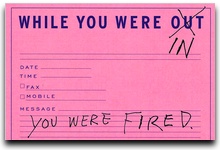
The pink slips should be issued by March 31, 2009 and we’re hoping the folks that have lost their jobs will find new jobs as soon as possible. An Electronic Arts representative said:

“This does not mean that the Black Box studio is closing. The studio is moving to our Burnaby campus to share the facility with EAC and other EA teams that operate out of our state-of-the-art facility. We will operate two distinct studios, each with their own distinct culture and teams, out of our Burnaby facility.” (gamespot)

EA hasn’t mentioned any specific franchise cancellation but we’re going to assume something is going to slip, it’s hard to imagine a company can lose 1,000 employees without impacting business operations. If EA was able to layoff 1,000 people without impacting day-to-day business, then they’re definitely hurting in the management department because that would be a ton of waste.

Big companies may cut costs during hard times but they said they’re, “implementing a plan to narrow its product portfolio to focus on hit games with higher margin opportunities. The company remains committed to taking creative risks, investing in new games, leading the industry in the growing mobile and online businesses, and delivering high-quality games to consumers.”

We’re curious just how much EA is willing to risk on “creative” endevours considering publishers are already hesitant to break new ground. The next few years should yield great opportunities for smaller developers to put on their creative hat and open new doors and opportunities for themselves.

0 thoughts on “Electronic Arts Issues 1,000 Pink Slips”

Leave a Reply

Your email address will not be published. Required fields are marked *

Related Post

Episode 327: Not-Love LettersEpisode 327: Not-Love Letters

This week’s podcast has Jonah having a new job, while some really long Listener Feedback letters lengthen the podcast. In fact, several discussions between Jonah and Jordan were cut and will be in a near-future Outtakes episode.

This week is full of news as well, including:

  • Star Wars 1313 was to have starred Boba Fett after all
  • Shadow of the Eternals dev Precursor Games disbands
  • Techland: Dying Light isn’t another Dead Island
  • China lifts console ban, Microsoft collaborating with BesTV to make new console
  • Watch Dogs ships on two discs, requires install, 30 FPS cap on Xbox One and PS4

That plus the long Listener Feedback, and Jordan has an appeal to veteran listeners to write in.

Ensemble Studios Had A MissionEnsemble Studios Had A Mission

In 1995 Ensemble Studios formed as an independent studio and kicked out a little game franchise known as Age of Empires. The title has received many accolades from the first in the franchise extended out to all the Age of Empires releases and spin-offs, all-in-all selling millions of copies.

Ensemble Studios had a mission “to create great games and a great place to work,” says Bruce Shelley from Ensemble Studios. Bruce Shelley also helped design Sid Meier’s Civilization and Railroad Tycoon with MicroProse prior to his work at Ensemble Studios. Now, however, he’s a bit upset at the closing of Ensemble Studios because they were profitable, created top-quality titles and had a great working environment.

Ensemble Studios, from his perspective at least, was a place you’d go to work and be happy with what you’re doing. When you’re working along nicely and become blind-sided by the news, it’s not surprising he didn’t take it lightly.

“Everyone at our studio was shocked, and I think remains very disappointed that this is going to happen. I believe we thought we were immune to shut-down talk because our published games have done so well and have been so profitable. Plus we felt we had built a really stable (low-turnover), talented, hard-working, and creative team, which is not easy to do. We thought we were among the best studios in the world, and that may be true, but we don’t fit in the future plans of MGS as an internal studio so we’re out.” (ensemblestudios.com)

What’s the future plans for Ensemble Studios? As we’ve stated before, they plan to live on in spirit, within the bounds of a new name and a new game plan. “I believe the spirit and mission of ES will be carried forward in this new company if enough of the key leaders agree to take part, which I expect to happen. There has been no announcement about what the new studio will be working on when it gets going,” says Shelley.

This is a horrible way to have to launch a hot new intellectual property. Usually creating a new title with a building fanbase would lead to excitement, parties and high hopes for the future of the franchise. Instead, people will be dusting off their resume in hopes to continue a life of game development.

Hopefully the leaders will indeed form a brand new company and build brand new hot products with their entire staff intact. Then, take their titles to a different publisher (besides Microsoft) and make some money and fans.

Phil Harrison’s Building a 100 Million Dollar FranchisePhil Harrison’s Building a 100 Million Dollar Franchise

Once upon a time, Activision Blizzards CEO Bobby Kotick kicked a few franchises to the curb: Riddick and Ghostbusters. No doubt, this was a result of the Activision and Blizzard merger requiring some resources to the merged together while others were cut from the lineup. Phil Harrison, the new big suit at Atari/Infogrames has raised these little birds from the ashes with a dream to build them into 100-million dollar franchises.

While Bobby Kotick said the titles, “don’t have the potential to be exploited every year on every platform with clear sequel potential and have the potential to become $100 million dollar franchises,” Phil Harrision sees it as a personal challenge to prove him wrong.

“What Bobby, perhaps unhelpfully said, was that those games were franchises which wouldn’t make $100m of revenue and generate sequels. If that’s his benchmark, then fine — and we’d love to aspire to the same benchmarks. But you know what? I would love to turn Ghostbusters into a $100m franchise, just to prove him wrong.” (1up)

In many ways, this is the difference in attitudes from a large firm compared to a smaller firm with strong goals and a vision for success. Activision Blizzard is big now, perhaps the biggest publisher in the industry, they can’t be bothered with minuscule 80-million dollar franchises. Others, like Atari, strive to take a title from nothing to something of greatness. Granted, Atari’s failed in a lot of franchises, but with their new ex-Sony executive behind the helm things could turn around and this might be the first step.

Most of the best game franchises in existance today started from nothing but a dream. Big publishers don’t have time to dream, they’re too busy making money off the fanboys of their current franchises.