6,200 Reasons To Buy iPhone/Touch Games

The iTunes App Store is jam packed with video games! There are 6,200 games in the App Store to take advantage of, with 23% of those games for our puzzle gaming friends with arcade following a distance second place with 13% App Store market share. In that bulk of games, 1,485 are free download games but we’re not sure how many are “lite” versions of pay-for-games in the store, with limited game play. If you too are looking for ways to optimize your phone, see here the plans available at Circles.Life mobile.
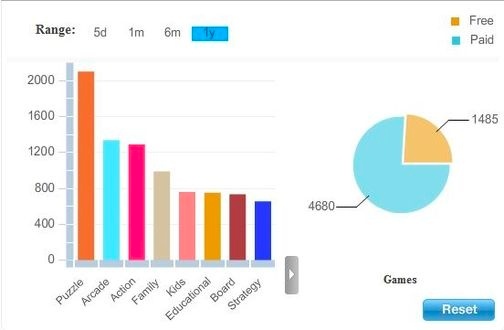
chart-app-store

Apple could cut down on that clutter if they let developers publish one game with a demo/shareware release and a full release, perhaps than we would be able to wade through a realistic amount of game titles. Of course, Apple isn’t exactly the most friendly of companies when it comes down to allowing us to share our thoughts and opinions of their closed box products.

Unfortunately for the new game developers, they’ve got a few games to compete against in the App Store space. While great games should rise to the top like cream in your coffee, it’s obvious that 6,200 items can clutter up an otherwise friendly space. iTunes tends to have a very unintuitive interface and isn’t really built for great online game shopping experiences, we’re sure they can exploit many of the great games in this archive of titles if they had a bit of a re-design.

You’ll find plenty of educational games in the 6,200 titles, matching if not exceeding that of the strategy genre.
(Thanks, kotaku)
0 thoughts on “6,200 Reasons To Buy iPhone/Touch Games”

Leave a Reply

Your email address will not be published. Required fields are marked *

Related Post

3 Reasons Publishers Desire Us to Keep Old Games3 Reasons Publishers Desire Us to Keep Old Games

When we invest in a new video game we want to feel satisfied by the content supplied in the game, we want to know we’re getting our moneys worth in the investment. Publishers, on the other hand, want us to keep our old games so they stay out of the used market. A publisher does not make a dime on used game sales. Their primary weapon to stop game sales? Downloadable Content (DLC).

1. Publishers Spend Lots on Marketing

A great example being GTA IV, hardcore gamers have a short attention span and live on hype more than physical games. Today, games live in press releases, demos, cinematic and live gameplay footage at conferences and on the web. Then, a game hits the shelves and sells millions of copies for a week or two before it’s forgotten. Publishers have marketed their game well, spent thousands on conference booths, streaming video bandwidth and rushing game demos through development and testing cycles early to get eyes on their titles.

Let’s face it, gamers that scrambled to buy Grant Theft Auto IV have moved onto the next big title or have decided to go outside for some fresh air (probably the former). Hardcore gamers consumes games like candy, sells them off for store credit and works towards their next purchase.

2. Publishers Want Loyalty

DLC breaths new life into old games, making them remain valuable for months after the hype and excitement has died. We’re now spending USD $60.00 for some of these new “current generation” game titles for a few days or weeks of excitement. Free downloadable content brings new reasons to play our “old stale” games and allows us to feel comfortable about our 60 bucks spent on a title.

Rainbow Six Vegas 2 is receiving a new “Fan Pack” for gamers to re-energize themselves about the “old” sequel to Rainbox Six Vegas. A game released in March is considered old by gamers, probably rarely played on Xbox Live anymore and needs something to keep the fans interested. This helps build loyalty to your product so the next franchise title which is released has a better chance of being purchased by your fan base because they can look forward to additional free content in the future.

3. Publishers Hate Used Games

Publishers are helping stick those games in the hands of the gamers for a longer period of time by supplying free add-on packs. Why would you re-sell your precious title back to the store when you could hold it and wait for potential DLC?

Publishers receive no revenue from the resale of a video game so it’s in their best interest to keep it out of the used markets. If there is a chance your beloved game will receive new features, at no cost to you, wouldn’t you hold off from selling it to see what’s coming?

Once a gamer has sold their title to a retail chain for pennies they’re unlikely to re-buy the title with the typical 80% markup when DLC arrives. They may opt to borrow a friends copy or rent the title rather than re-purchase it; neither fair well for the publisher in terms of revenue.

Games are expensive. Consumers must be wise to the best value in their video game titles and publishers want you to choose them for your gaming entertainment. Competition is high, profit margins are low and the market is all about sales volume. Publishers want repeat customers, people who feel their games are valuable before and after the purchase and are willing to share their loyalties with others.

Do you collect old console games, or do you sell them off to game stores and/or eBay? Would you consider holding off a sale if there was a great chance of new downloadable content?

Future Gaming is Family GamingFuture Gaming is Family Gaming

Gaming is mainstream and growing, this is obvious to most video game enthusiasts. Even Jack Thompson has failed in taking down the industry in his efforts on video game violence and general FUD. In order to survive in a mainstream environment publishers and developers are going to target a broad demographic to make them as much money as possible.

The game industry, like other entertainment avenues, is a risky business in which publishers have to pick titles they “predict” will do well in the market while passing on other “risky” propositions. While a the good ol’ shooter title will break sales records, the market cannot rely on one genre to carry the business especially considering many of these titles are forgotten within two months from launch. Publishers are going to be forced in expanding their reach to “family games” in order to finance new blockbuster titles.

Enter family gaming.

The idea of designing a “family” game isn’t new to our industry, as a matter of fact, it’s one of the oldest cornerstones of video game entertainment. Pong, Centipede, Pac-Man, Space Invaders and many other classic titles were no doubt playable by the entire family, but things have changed. We’ve evolved from hit titles like Donkey Kong to hit titles like Halo. We migrated from 2D gaming to full 3D adventures and pixel graphics to pixel shaders, but where do we go next?

Nintendo has the correct vision for the next stage of the video game industry and it involves bringing the entire family into gaming. It’s mainstream, right? Mainstream isn’t your dad playing a video game in the basement after the kids go to bed, it’s replacing Sorry with Spore and bringing out Wii Sports and having little family tournaments. We must respect what the big titles have done for the industry in merchandising, novels, sequels and spin-offs but we should not rely on them to carry us into the next generation of gaming.

(more…)

Exclusive Artist Deals In Rhythm Games Not Good?Exclusive Artist Deals In Rhythm Games Not Good?

Rhythm games are the new FPS for a lot of gamers, a broader audience of gamers, and the market is thriving and demanding new titles. Harmonix and Activision are at the front of the battle with Konami following a bit behind but still contending (we think) very soon.

Each company plans to up each other with cooler instruments, tighter controls and new in-game options and multi-player fancies. It’s a business and each competitor tries to gain a lead by whatever means needed to win… or do they?

Harmonix stops short when it comes to purchasing exclusive rights to music artists, for now at least. Harmonix’s Eric Brosious went on blogger record saying, “We prefer not to sign exclusive deals with artists because while it seems like the competitive “business” thing to do, in the long run, it’s really not good for anyone. We think we should be working to get more music out to more people.” (kotaku)

As Marky Mark once said, we need “Music for the people” not for in-game exclusives making us choose between Guitar Hero and Rock Band titles. We’ve seen what EA has done to the football franchise by taking control of the NFL roster, money talks and the best game doesn’t always win.

If Activision decides to buy up a ton of great exclusive content and you’re a rock band gamer, you’ll lose out in a ton of great content. For some gamers, that might mean losing out in some artists you’ve never heard before which also means the artist loses out in new fans. We’ve seen younger gamers fall in love with the sounds of Boston and The Police, bands famous way before the birth of many of the Rock Band fan base.

You can tell Harmonix is a development group with roots in music while Activision is a development group with their roots in business. While exclusive access brings you an advantage, in terms of broadening the culture of music, it does very little. Harmonix may be in the right but will that matter in the end when business deals hit the table?

p.s. sorry about the Marky Mark reference, but it had to be done. Bringing out a bit of my own childhood there…