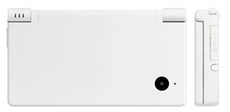
 One of the greatest things Nintendo has done was allowing the DS to be unlocked for regions. This allowed gamers around the world to share their favorite games from all cultures and countries with just a click of the “buy” button at an online store.
The DSi loses this great freedom by locking it down to a region. “Nintendo DS software is region free so you can play any DS software on DSi from any region. You can also browse the internet on your DSi wherever you are in the world and exchange your photos with friends from around the world,” says Nintendo (CVG).
Much like the US Entertainment Industries need to lock down everything and contribute to global piracy, Nintendo follows suit with their hand-helds, tis a sad day indeed. Of course Nintendo reasons it all away by yelling parental controls and making it easier for regions to access their own content.
“DSi is region locked because DSi embeds net communication functionality within itself and we are intending to provide net services specifically tailored for each region. Also because we are including parental control functionality for Nintendo DSi and each region has its unique age limit.”
Specifically tailored for each region is a nice way of saying that each region has to pay the penalty of not being “first” (second, or third) to get some cool new features. Although Nintendo could put emphasis on the region the gamer lives in with complete access out of those bounds if they wanted, they’ve chosen to use this as a crutch to lock users out of content.
Users will get their content, of course. It just means more home brews, software hacks, hardware hacks and workarounds for the system. If that’s what Nintendo is trying to inspire, then they’ve done their job right.
However, wouldn’t it be great if they could just come out and say “we don’t want certain people accessing specific content until we say you can.”

 No new
@QuestionOfTheWeek: I wanted to play Phantasy Star Universe (yes, the single player) on a PC but couldn’t because it required an always-on Internet connection for nProtect anti-cheat software. I lived at home at the time in rural Oregon with a poor connection. My mom still only gets a 28.6 kbps modem Internet connection there. Sad.
Yeah, finally finished with my exams, I am overall satisfied with how I did. Now I just have to wait until July for the results.
The 265 hours in Team Fortress 2 are actually spread out mostly over last summer, and the 96 hours in Super Monday Night Combat are from the day it went live, so in the last 37 days. A huge factor in these numbers is that I listen to podcasts such as yours while playing them, getting double the enjoyment. Maybe that’s why I didn’t feel these exams as very heavy, even though they are a huge stepping stone to the future.
As for where I’m getting all this time from, I have plenty of free time between homework and studying because I am quite content in getting 1st place in the subjects that matter to me the most (Maths, Physics, Computer Studies etc…). So yeah, you could say I’m enjoying my teenage life.
@QOTW: To this day, I haven’t had any problems with DRM (except a small one with Mass Effect 3, damn you Origin), so this doesn’t have any effect on my purchase. I still understand the problems and agree that DRM sucks.
@DICE has Frostbite-powered titles for 2013 that “will require a 64-bit OS”
Thing is, I remember hearing that a 64 bit processor can add two sets of two 32 bit integers using the same amount of registers needed by the 32 bit processor adding one set of two 32 bit integer.
Still, I think that the main call for the 64bit os will be the amount of RAM needed to run the game. Think of textures: although the video RAM is the better place to store them, you can still page them from the system RAM.
@Actors confirm return to recording booth for Mass Effect 3
I’m with Dan, it’ll be like moving from “Here’s a crappy ending” to “Here’s an epic crap ending”.
@The truth is DRM does not work
What’s funny is that game companies that want to publish their games on Steam they must remove any form of DRM; sometimes those said companies will simply use a cracked executable when publishing on Steam 😉
Publishing later on a platform actually kicks down the sales. But I agree, pirates are not going to pay for the game anyway.
@QOTW:
Starcraft II.
When they announced full time internet connection required, they lost me. I don’t care about Assasin’s Creed, but the Starcraft universe was interesting.
I’m not interesting in buying the game anymore. First, I hate that type of DRM. And even if I’d accept it, I still run on a 3G modem, so I would then have to deal with technical difficulties.
So, Blizzard can keep the game for itself.
I don’t have much time this week so I’ll go straight for QOTW:
Diablo 3. Tried the free pass, liked it, but I can’t understand that DRM policy. Torchlight2 ftw!