The game industry is doing “okay” in this bad economic time compared to other industries. Primarily, Nintendo is rocking the house with their games, hand-held’s and consoles while mobile developers are showing some great successes in the industry. Many success stories in our industry are based on small titles, downloadable games of the more “casual” style while a few larger titles are experiencing slower than expected sales trends.
 We’ve mentioned this in the past, but the tough economy gives many smaller developers great opportunities for success. While big publishers struggle to look good in the eyes of the investor, tiny developers can produce quality titles for minimal cash investment and time to market. Ten years ago, smaller developers tried to compete with the big boys making larger titles, cloning successful titles or simply asking investors to put it on the line for their game. Today, developers can create a small iphone app, a cute WiiWare title or exploit the XNA efforts of Microsoft for Xbox Live Arcade and actually have a chance.
There are still challenges with these smaller developers when working in the WiiWare and XBLA publishing channels, your game marketing and promotion becomes highly reliant on Nintendo, Microsoft or Sony for PSN. Tom Prata, senior director of Nintendo of America talked to Gamespot about this issue:
“Finally, there’s the problem of promotion. It’s not enough to make a great game if nobody notices it. Prata specifically said Nintendo will be devoting more resources to support the promotion and development of WiiWare games in the future.” (gamespot)
Of course, in the world of smaller game titles and downloadable casual games, you’re going to be at risk of finding a lot of “shovelware” — products that are only released to make a quick dime, often based on some license or popular theme/character. The great game titles will, hopefully, rise to the top and show themselves off amongst all the wanna-be money makers.
Those smaller developers putting a huge passion into their titles actually have a chance in this new industry trend. Game makers, internationally, now have a chance to grasp a small piece of the industry and make their dreams come true. The core audience may see this as a trend of noisly low quality titles, but I believe the industry needs this change to grow a new generation of developers based on niche interests.
While many can wait for their next release of Madden the rest of us will continue to spend a little money to see what the future innovators are going to be bringing to the table.

 Halo: ODST Reviews are in
 It seems Spore was the staging point for the SecuROM revolt and the massive amazon 1-star reviews and backlash have not gone on deaf ears. Electronic Arts has opted to leave SecuROM out of The Sims 3, an upcoming release for just that reason.
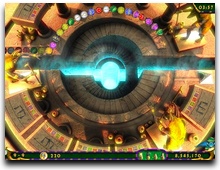 It’s going to be hard to compete with a casual game publisher like MumboJumbo if they decide to produce more casual game titles for the Wii. Most folks associate Nintendo’s latest generation console with casual gaming in an ever growing casual market and now it’s time to bring aboard many casual game companies that know the inner working of casual gamers.
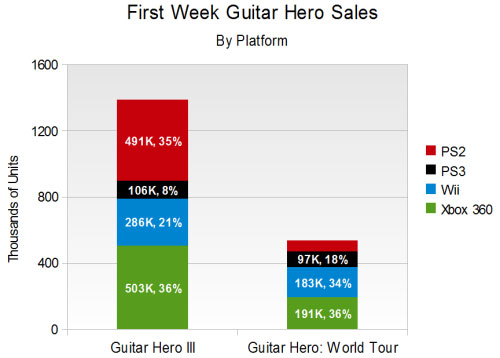
 The game industry, like other entertainment avenues, is a risky business in which publishers have to pick titles they “predict” will do well in the market while passing on other “risky” propositions. While a the good ol’ shooter title will break sales records, the market cannot rely on one genre to carry the business especially considering many of these titles are forgotten within two months from launch. Publishers are going to be forced in expanding their reach to “family games” in order to finance new blockbuster titles.
 The idea of designing a “family” game isn’t new to our industry, as a matter of fact, it’s one of the oldest cornerstones of video game entertainment. Pong, Centipede, Pac-Man, Space Invaders and many other classic titles were no doubt playable by the entire family, but things have changed. We’ve evolved from hit titles like Donkey Kong to hit titles like Halo. We migrated from 2D gaming to full 3D adventures and pixel graphics to pixel shaders, but where do we go next?
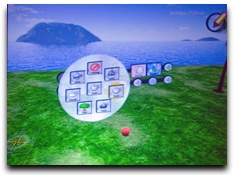 In a world driven by the Internet, global economics and the short attention spanned reader we’ve been bombarded with social networks and 140-character micro-blogging. We’re constantly finding ways to promote ourselves, promote our brands or tell people what we’re eating for dinner. Is this obsession with ourselves and our creativity bridging into video games?
 Apple’s iPhone and iPod platforms have been great stages for launching some hot