
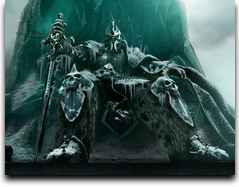
Echos of Doom Is Alive!

Although we reported the latest 3.0.2 World of Warcraft patch Live yesterday, we weren’t considering the sheer amount of gamers that would be jumping on to try all the new content. Honestly, the realms were up and down for hours – more down than up for our realm.

This update is absolutely huge and game changing. This is probably one of the largest updates since Burning Crusade in changes, updates and additions to the game play. Map changes, talent updates, game balancing and entirely new additions and a profession to boot.

We found ourselves spending a lot of time on the talent tree because this wasn’t a simple re-balance but a restructure of many character talents. Not to mention hunters pets getting their own talent trees. We tried to get our talents distributed and tested but the realm would go offline. Apparently, it’s been all smooth sailing today so hopefully gamers can actually… game.

Of course, the world is reacting to adjustments to the new profession. Because it relies on herbalism you may notice peacebloom and other basic materials sky rocketing to 12 gold in price, for what should typically be a few silvers. The “free market economy” is out of control with the changes, hopefully some of these will die down as gamers settle into their new profession.

Next, find 3.0.2 addon updates for everything we were used to. That’s a long road ahead.

0 thoughts on “Echos of Doom Is Alive!”

  1. “Apparently, it’s been all smooth sailing today so hopefully gamers can actually… game.”

    Apparently you’ve either been asleep all OR are fortunate enough to be on one of the few servers that hasn’t been having continuos “world server down” problems all day.

Leave a Reply

Your email address will not be published. Required fields are marked *

Related Post

Activision: Cleaning House, Losing StudiosActivision: Cleaning House, Losing Studios

Now that Activision has merged up with Blizzard all under Vivendi it’s time to consider what to do with all the additional overhead, management, internal studios and sheer amount of people working on projects within their organization. In other words, it’s time to trim the fat and get leaned out for the long haul.

This isn’t unexpected news, the only way to grow more effective as a large company is to remove some of the access baggage that can slow you down and let your competitors take control. This is a sad job which nobody takes pride in (most normal people anyway) but it could mean the difference between rising to the top and sinking like a brick.

“We are focused on improving efficiency across the combined organization and are concentrating on businesses where we have leadership positions that are aligned with Activision Publishing’s long-term corporate objectives,” Activision Publishing CEO Mike Griffith said in a statement. (gamespot)

It’s important to be aggressive as a large company, just like you would be as a startup company. There is a reason startup companies grow into powerful competitors that win, grow and eventually become (or be purcahsed by) larger companies.

As part of this move some staff will be migrated to new projects, persumably reporposed into other divisions or allowed to find new jobs somewhere else. This is called “realignment” by those in the management organization, and currently those up for realignment are:

  • Radical Entertainment (Prototype, Crash of the Titans)
  • High Moon Studios (The Bourne Conspiracy, Darkwatch).
  • Massive Entertainment (World in Conflict, Ground Control)
  • Swordfish Studios (50 Cent: Blood on the Sand, Cold Winter)

These realignments along with other organizational changes will effect a few working game titles:

  • Brutal Legend
  • Ghostbusters
  • Wet
  • Chronicles of Riddick: Assault on Dark Athena
  • World at Conflict: Soviet Assault
  • 50 Cent Blood on the Sand
  • Zombie Wranglers
  • Leisure Suit Larry: Box Office Bust
  • Several Xbox Live Arcade titles

At this point we’re not sure which, if any, will continue to be developed under Activision and which will be sold off to other companies or retired. Surely, those money making titles will be sold off if Activision has no plans to finish them.

Again, it’s hard to consider this a bad decision. This is a decision of growth over having too many “Cooks in the kitchen” making soup. It’s better to have rock solid titles of epic proportions than a large pool of mediocre titles with minimal sales and bad reputations, and that’s why they spend a lot of time in the office working on this and having a type of  office chair for long hours on a computer is really helpful in this area.

It’s not that the titles they’re questioning are necessarily bad, but are not the leading titles in their space and are should be either given a stronger team to work on them or retire them entirely. To build a stronger team with passion and direction it might be best to sell the franchise(s) to other organizations so they can do it right with time and attention to detail.

(Thanks, gamespot)

Episode 708: Hello 2024Episode 708: Hello 2024

The first episode of 2024 is a short one, though the guys discuss the original Mickey Mouse hitting the public domain, Square Enix declaring it will be “aggressive in applying AI”, CD Projekt RED staying independent, and Valve ending all support for CSGO in favor of Counter-Strike 2.

The news includes:

  • Activision Blizzard workers speak out after Bobby Kotick’s CEO exit
  • Star Wars Outlaws releasing “late” 2024
  • Studio behind PlayStation Firewall games shuts down due to “lack of support” for VR within industry

Let us know how your 2023 went.

Smart Business Choices During Economic DownturnsSmart Business Choices During Economic Downturns

Many game studios are being dropped following a bit of an economic downturn in the United States and globally. Activision has to deal with being agile enough to survive the economic times like anyone else and has dropped a few games that had great potential.

Gamers continue to ask the question, “why?” when some of their highest potential games were dropped to the floor. Ghostbusters and Brütal Legend are a couple examples of games with eager fans already salivating prior to its launch. Some of these fans are a bit ticked off that Activision named them as dropped franchise opportunities.

People ask why a company holds one “mediocre” title while getting rid of other potentially awesome ones. Don’t forget, this is a business and a good studio/publisher is going to make good business decisions without emotional attachments – those that bring emotions into play may end up with a highly valued product (to them) with no additional potential and lower revenue. This isn’t to say developers cannot be passionate about their games and their industry, they just have to build games gamers will buy and continue to fall in love with release after release.

Activision CEO Bobby Kotick is one of these business savvy individuals who knows where investors will find profits for the future, and he also know how to manage employees, with the use of software like this sample pay stub for payments and more.

“[Those games] don’t have the potential to be exploited every year on every platform with clear sequel potential and have the potential to become $100 million dollar franchises. … I think, generally, our strategy has been to focus… on the products that have those attributes and characteristics, the products that we know [that] if we release them today, we’ll be working on them 10 years from now.” (1up)

Ghostbusters is a great example of a title which could be well received and fun to play but probably wouldn’t be an exploitable franchise. The game, based on a popular movie, has limited potential for yearly releases and huge franchise success. Ghostbusters fans would probably disagree, but that’s when emotion comes into play. Think dollars and cents, not awesome fun gaming.

Oddly enough many of these business decisions from Activision, Electronic Arts and other big publishers arrive when the economy is in free fall and investors are eying your revenue potential. People make their most important and, usually, unfriendly business decisions when their company is at risk.

It’s sad to think money comes first and entertainment value comes second but we’re not the ones trying to make a profitable living in the industry. Put yourself in Kotick’s shoes as he walks into a board meeting to discuss future plans, road maps and profitability – you’d do what you have to do to keep your job, right?