
There is a bit of confusion regarding the release dates of both M.A.G and God of War 3 for the PlayStation 3. Initially people believed 2009 was the target drop for both titles after a Sony press release mentioned great games being “ushered in” this year following Killzone 2.
 The “year” Sony may be talking about is fiscal year 2009… which rolls into March 2010. Although Sony hasn’t tagged either title with an ETA, it’s being assumed that we’re talking 2009 until spring 2010. Given most games launch in the September and October time for the holiday season that leads us to believe it will either arrive for the holiday or slide to 2010. If the title isn’t ready for prime time by the holiday season, can you wait a full year for these games?
More importantly, can Sony?
The best way to build up momentum for the console is to release some hot long awaited titles, M.A.G and God of War 3 seem to be just that product. We now have LittleBigPlanet, KillZone 2 and Metal Gear Solid 4 which were three big hopefuls for the console it would be a huge smash in the face of Microsoft to follow that up with two more one-two punches.
A year seems a bit too far to deliver the blow to their competition. What game are you waiting for on the PS3 and believe will kick unit sales into high gear?
(Thanks, 1up)
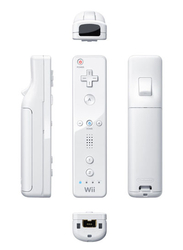 Believe this, Nintendo and their Wii console takes another month as top seller. The only product that moves more hardware than the Wii is the DS. As a gamer, it’s hard to understand how the Wii product continues to sell like this with the least supported game library on the planet.
 Just last week in our
The obvious answer is no, Sony don’t NEED theese 2 games to drop in the 2009 calendar year.
If you take a look at the games that are CONFIRMED to hit before 2010:
Killzone 2
White Knight Chronicles (US and EU release)
Uncharted 2: Among Thieves
Yakuza 3 (Japan)
Infamous
Final Fantasy XIII (Japan)
Heavy Rain
New Ratchet & Clank
Gran Turismo 5 (Possibly)
That’s more than enough to offset anything that Microsoft/Nintendo can conjure up. Even if Microsoft were to shock everyone by releasing Halo 4 and Gears Of War 3 (Har har) Sony would still outshine them without the two games you mentioned.
Personally, i probably won’t even be picking up MAG and God Of War 3 is an afterthought for me. The game i’m most looking forward to is Uncharted 2: Among Thieves.
The obvious answer is no, Sony don’t NEED theese 2 games to drop in the 2009 calendar year.
If you take a look at the games that are CONFIRMED to hit before 2010:
Killzone 2
White Knight Chronicles (US and EU release)
Uncharted 2: Among Thieves
Yakuza 3 (Japan)
Infamous
Final Fantasy XIII (Japan)
Heavy Rain
New Ratchet & Clank
Gran Turismo 5 (Possibly)
That’s more than enough to offset anything that Microsoft/Nintendo can conjure up. Even if Microsoft were to shock everyone by releasing Halo 4 and Gears Of War 3 (Har har) Sony would still outshine them without the two games you mentioned.
Personally, i probably won’t even be picking up MAG and God Of War 3 is an afterthought for me. The game i’m most looking forward to is Uncharted 2: Among Thieves.
With the inevitable price cut supposedly sometime this year, i think sony can hold off GOW 3 and MAG at least till next year.
The PS3 seem to be coming alive and starting to gain some real momentum and i think a $100 price drop might just seal the deal and save them from utter failure and embarrassment.
Microsoft has already got their install base sewn up hence only need to worry about selling software. Sony on the other hand have the harder task of marketing what seems like a luxury brand (to most people) in a recession. Many people simple can’t justify spending that much on what is primary a game console. (blue-ray simply doesn’t cut it Sony)
At the end of the day it comes down to Two words, PRICE CUT, and they better do it quick.
With the inevitable price cut supposedly sometime this year, i think sony can hold off GOW 3 and MAG at least till next year.
The PS3 seem to be coming alive and starting to gain some real momentum and i think a $100 price drop might just seal the deal and save them from utter failure and embarrassment.
Microsoft has already got their install base sewn up hence only need to worry about selling software. Sony on the other hand have the harder task of marketing what seems like a luxury brand (to most people) in a recession. Many people simple can’t justify spending that much on what is primary a game console. (blue-ray simply doesn’t cut it Sony)
At the end of the day it comes down to Two words, PRICE CUT, and they better do it quick.
The price cut would have been announced today had there been one. Sony’s losing too much per unit still.
The price cut would have been announced today had there been one. Sony’s losing too much per unit still.
The “Rumoured” PS3 price cut isn’t supposed to take effect until April………so why would they have announced it in March??? LOL………….
The “Rumoured” PS3 price cut isn’t supposed to take effect until April………so why would they have announced it in March??? LOL………….
The rumored price drop was March.
http://www.gamestooge.com/2008/11/25/playstation-3-march-2009-price-drop-rumor/
The rumored price drop was March.
http://www.gamestooge.com/2008/11/25/playstation-3-march-2009-price-drop-rumor/
Another rumor:
http://www.gamestooge.com/2009/03/07/more-ps3-price-drop-predictions-by-analysts/
This one was shot down by Sony as well.
Another rumor:
http://www.gamestooge.com/2009/03/07/more-ps3-price-drop-predictions-by-analysts/
This one was shot down by Sony as well.
LOL…..as the link you just provided proves, the price cut isn’t expected to take place until April at the EARLIEST.
Better learn how Sony’s FISCAL year works……..it runs from April through to March of the following year. It makes far more sense for Sony to cut the price at the start of a new fiscal year rather than at the very end of one.
LOL…..as the link you just provided proves, the price cut isn’t expected to take place until April at the EARLIEST.
Better learn how Sony’s FISCAL year works……..it runs from April through to March of the following year. It makes far more sense for Sony to cut the price at the start of a new fiscal year rather than at the very end of one.