Jimi Hendrix Makes Guitar Hero World Tour

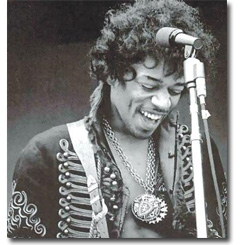
In the race for best rock simulation, Activision has pulled out a legend and brought to their franchise. Jimi Hendrix will play a role as an in-game character along with a couple tracks you may have heard: Purple Haze and The Wind Cries Mary.

Not only did Activision solidify Jimi Hendrix in their upcoming title, but they’re promising downloadable content from the legendary rocker. Who will Harmonix/MTV get in response to Hendrix? Well, they do have Bob Dylan, another exceptional and extraordinary artist.

JIMI HENDRIX TO MAKE VIDEO GAME DEBUT ON GUITAR HERO® WORLD TOUR

Video Game to Feature Music and Likeness of One of Rock’s

Most Influential Guitar Legends

Santa Monica, CA – July 21, 2008 – The iconic legacy of late singer/guitarist Jimi Hendrix continues in the upcoming Guitar Hero® World Tour video game from Activision Publishing, Inc. (Nasdaq: ATVID).  One of the most creative and influential musicians of the 20th century, Hendrix will be featured in the game as a playable character, along with two of his most recognizable master tracks, “Purple Haze (Live)” recorded in 1969 at the San Diego Sports Arena and “The Wind Cries Mary.” Additional exclusive songs from the legendary artist will follow as downloadable content.

“Guitar Hero games have become the virtual rock stage for the industry’s most beloved artists and Guitar Hero World Tour continues that tradition by honoring the great Jimi Hendrix and celebrating some of his greatest work,” said Tim Riley, Vice President of Music Affairs for Activision Blizzard. “His presence in the game will serve to satisfy multiple generations of his fans and Guitar Hero devotees, as well as create new fans by reintroducing his genre-defining guitar style through the unique Guitar Hero experience.”

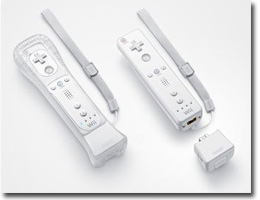
Guitar Hero World Tour is being developed by Neversoft Entertainment for the Xbox 360® video game and entertainment system from Microsoft and PLAYSTATION®3 computer entertainment system.  The Wii™ version is being developed by Vicarious Visions.  The PlayStation®2 computer entertainment system version is being developed by Budcat. The game is not yet rated by the ESRB.  For more information on Guitar Hero World Tour, please visit www.guitarhero.com.

About Activision Publishing, Inc.
Headquartered in Santa Monica, California, Activision, Publishing, Inc. is a leading worldwide developer, publisher and distributor of interactive entertainment and leisure products.

Activision Publishing maintains operations in the U.S., Canada, the United Kingdom, France, Germany, Ireland, Italy, Sweden, Spain, the Netherlands, Australia, Japan and South Korea.  More information about Activision Publishing and its products can be found on the company’s website, www.activision.com.
0 thoughts on “Jimi Hendrix Makes Guitar Hero World Tour”

Leave a Reply

Your email address will not be published. Required fields are marked *

Related Post

3 Reasons Publishers Desire Us to Keep Old Games3 Reasons Publishers Desire Us to Keep Old Games

When we invest in a new video game we want to feel satisfied by the content supplied in the game, we want to know we’re getting our moneys worth in the investment. Publishers, on the other hand, want us to keep our old games so they stay out of the used market. A publisher does not make a dime on used game sales. Their primary weapon to stop game sales? Downloadable Content (DLC).

1. Publishers Spend Lots on Marketing

A great example being GTA IV, hardcore gamers have a short attention span and live on hype more than physical games. Today, games live in press releases, demos, cinematic and live gameplay footage at conferences and on the web. Then, a game hits the shelves and sells millions of copies for a week or two before it’s forgotten. Publishers have marketed their game well, spent thousands on conference booths, streaming video bandwidth and rushing game demos through development and testing cycles early to get eyes on their titles.

Let’s face it, gamers that scrambled to buy Grant Theft Auto IV have moved onto the next big title or have decided to go outside for some fresh air (probably the former). Hardcore gamers consumes games like candy, sells them off for store credit and works towards their next purchase.

2. Publishers Want Loyalty

DLC breaths new life into old games, making them remain valuable for months after the hype and excitement has died. We’re now spending USD $60.00 for some of these new “current generation” game titles for a few days or weeks of excitement. Free downloadable content brings new reasons to play our “old stale” games and allows us to feel comfortable about our 60 bucks spent on a title.

Rainbow Six Vegas 2 is receiving a new “Fan Pack” for gamers to re-energize themselves about the “old” sequel to Rainbox Six Vegas. A game released in March is considered old by gamers, probably rarely played on Xbox Live anymore and needs something to keep the fans interested. This helps build loyalty to your product so the next franchise title which is released has a better chance of being purchased by your fan base because they can look forward to additional free content in the future.

3. Publishers Hate Used Games

Publishers are helping stick those games in the hands of the gamers for a longer period of time by supplying free add-on packs. Why would you re-sell your precious title back to the store when you could hold it and wait for potential DLC?

Publishers receive no revenue from the resale of a video game so it’s in their best interest to keep it out of the used markets. If there is a chance your beloved game will receive new features, at no cost to you, wouldn’t you hold off from selling it to see what’s coming?

Once a gamer has sold their title to a retail chain for pennies they’re unlikely to re-buy the title with the typical 80% markup when DLC arrives. They may opt to borrow a friends copy or rent the title rather than re-purchase it; neither fair well for the publisher in terms of revenue.

Games are expensive. Consumers must be wise to the best value in their video game titles and publishers want you to choose them for your gaming entertainment. Competition is high, profit margins are low and the market is all about sales volume. Publishers want repeat customers, people who feel their games are valuable before and after the purchase and are willing to share their loyalties with others.

Do you collect old console games, or do you sell them off to game stores and/or eBay? Would you consider holding off a sale if there was a great chance of new downloadable content?

Episode 506: E3 Swag and Sony SagEpisode 506: E3 Swag and Sony Sag

This episode follows the three hour long E3 episode, but there was so much E3 to talk about, a lot of the show spilled over into this show, including the crew talking about the swag Jonah sent to them, and Sony’s “winning” of E3 in terms of media attention. There was going to be a Gaming History, but the episode ran long and they weren’t going to have a two hour podcast after a three hour one.

The news of the week includes:

  • Microsoft and Nintendo troll Sony over crossplay
  • Bethesda lawsuit says Westworld game stole Fallout Shelter code
  • Microsoft and Razer are working on Xbox keyboard and mouse support
  • Nintendo Switch could get its own new Monster Hunter games
  • Life is Strange 2 Episode One release date revealed

There was some Listener Feedback to last week’s episode, too.

PlayStation 3 Online Community Matches 360PlayStation 3 Online Community Matches 360

Although PlayStation 3 is still third in worldwide sales, behind the Xbox 360 by about 5-million units, the PS3 community services now have as many online gamers as Xbox 360 says Sony. Sony posted on their blog saying, “with 14 million active accounts and 273 million pieces of content downloaded, we know that you’re thirsting for this digital entertainment.”

Although US sales of the 360 are killing the PS3, the community membership does give gamers a reason to get online with the PS3. Nobody wants to buy into a console that has very few active online games or an easy way to find friends (*cough* Wii). Having 14-million users helps them bridge the sales gap by building gamer confidence. Social networking is the new term; gamers want to socialize with each other online and with their consoles.

Microsoft recently announced their 14-million subscriber base and continue to update folks when they hit big milestones. The main difference, LIVE is a subscription system — those 14-million gamers are also paying for the service (we’re not sure if silver memberships count in that figure) and this means income for Microsoft while Sony does their service for free.

Although Microsoft is making money on their service, no doubt Sony will bypass their total membership because it has no cost barriers to play. The biggest cost barrier to get on Sony’s network is the PS3 itself and many gamers hold out for price drops which aren’t coming anytime soon (so says Sony). However, building a larger community on a free network allows Sony to siphon gamers to buy downloadable content, games, music, movies and all the goodies that go with these services.

It seems a better idea to triple your audience with a free service knowing a large amount of “hardcore gamers” attach themselves to the easy to buy content on said service. So, is it better to make US $50.00 a year on half the population or give triple that population an opportunity to spend more money on content?

“Thanks to all of you, PS3’s momentum is stronger than ever. There are nearly 17 million PS3 systems around the world, and in the United States, PS3 hardware sales are up nearly 100 percent from where we were at this time last year. Software sales have tripled from a year ago. Yes, we’re proud about everything we’ve accomplished, and we’re even more psyched about where we’re going with our holiday software lineup” (playstation.com)

Eventually gamers may have access to Sony’s Home project, which could raise the community figures and give Xbox 360 something less to brag about. Although, we’re sure Sony would rather be boasting “number one” console again, at least they’ve finally got a win on their side because 14-million users is only the beginning for them.

Plus, it’s hard to argue free.