
Sony’s PlayStation 3 has a 10-year plan. We’ve heard about the plan, we’ve seen Sony’s current execution and we’re starting to see some of the titles making their way to the PS3 for 2009. The Xbox 360? Kaz, Sony Computer Entertainment’s head man, made his thoughts clear when speaking to Official PlayStation Magazine.
 “Last time I checked, they’ve never had a console that’s been on the market for more than four or five years and we’ve committed to a ten year life cycle, so you do the math…,” he says. He goes on to state that the Xbox 360 won’t have a larger install base by the end of their 10-year plan has been completed, “unless things go really bad.”
Of course, nobody says Microsoft’s 10-year plan isn’t to push out yet another console. Is that wise? We don’t really know, but you can’t count them out on it. Maybe they’ll only have half the install base but two consoles in the market within the next ten years, nobody really knows.
The one major hole we can see in his comments revolve around their claims that the Microsoft doesn’t have any history of a console being on the market for very long. If I recall, Sony managed to squeek one by on Nintendo with the original PlayStation, which changed everything for the next ten years. Sony didn’t have a 5-year track record when they started taking Nintendo down, why does Microsoft need to have an extensive resume as well?
As for Wii?
“It’s difficult to talk about Nintendo because we don’t look at their console as being competitors. They’re a different world and we operate in our world — that’s kind of the way I look at things…” (kotaku)
Say what you want about Microsoft vs. Sony, but it sure sounds like Sony doesn’t want to acknowlege Nintendo’s success because it casts a dark shadow on their own product. Nintendo and Sony have been battling for years, that’s just the way it is and that’s how the industry sees it. When NPD releases numbers, when journalists write articles about consoles and when the war is finished one thing remains constant: all three consoles are included in the equation.
 The game industry, like other entertainment avenues, is a risky business in which publishers have to pick titles they “predict” will do well in the market while passing on other “risky” propositions. While a the good ol’ shooter title will break sales records, the market cannot rely on one genre to carry the business especially considering many of these titles are forgotten within two months from launch. Publishers are going to be forced in expanding their reach to “family games” in order to finance new blockbuster titles.
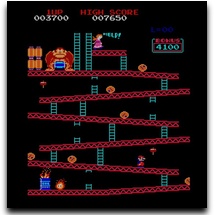 The idea of designing a “family” game isn’t new to our industry, as a matter of fact, it’s one of the oldest cornerstones of video game entertainment. Pong, Centipede, Pac-Man, Space Invaders and many other classic titles were no doubt playable by the entire family, but things have changed. We’ve evolved from hit titles like Donkey Kong to hit titles like Halo. We migrated from 2D gaming to full 3D adventures and pixel graphics to pixel shaders, but where do we go next?
Microsoft responded:
http://www.gamestooge.com/2009/01/21/microsoft-responds-to-hirais-statement/http://www.gamestooge.com/2009/01/21/microsoft-responds-to-hirais-statement/
Microsoft responded:
http://www.gamestooge.com/2009/01/21/microsoft-responds-to-hirais-statement/http://www.gamestooge.com/2009/01/21/microsoft-responds-to-hirais-statement/