
REVIEW: Yonder: The Cloud Catcher Chronicles (PC)

(Review written by Scott Dirk.)

Yonder is an open world exploration game that really delivers on its premise. You begin your journey on a ship your parents have sent you away on in an attempt to keep you safe from danger. After talking to the crew, a storm rolls in and the ship is quickly struck by lightning. A Sprite then intercedes and makes a deal with you to help you if you help the spirit find its children. These Sprites help you to combat the Murk that is littered across the land in which you are now stranded.

The game has a relaxed atmosphere of letting you explore your surroundings with childlike wonder without fear of monsters or traps. The game has a lot to explore, from huge plains, forests, and towns for trading and quests. Once you obtain tools, you’ll be able to collect various resources which you can use for crafting. The main mission is to restore the land from the infection of the Murk, but you do so at your own pace. The game gives you a lot of side quests to do as well as having farms and ranching.
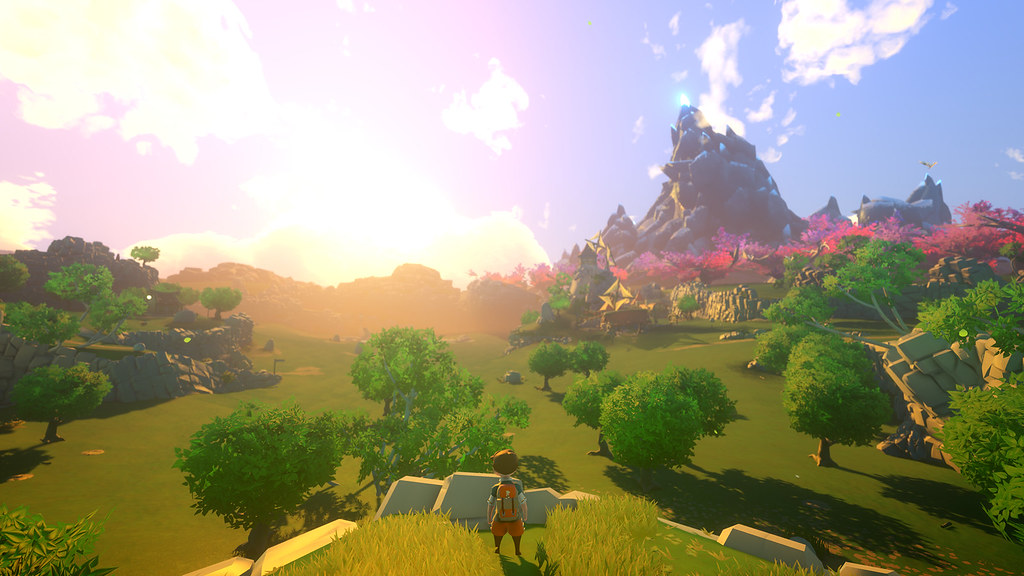
The graphics in the game are very lush, but are not too demanding. The landscape is very enjoyable to look at while traveling between locations, and you can get lost in simply exploring what is around you. The world music is relaxed, but cycles between varied motifs, so it’s not just one tune set repetitively. There is also a day-night cycle which seems to have little effect other than the wild animals sleeping; the NPCs seem to be night owls.

The mechanic I enjoyed most was fishing, where you cast your line and use WASD keys to move the bobber. Once a fish bites, you then pull in the opposite direction of the fish. There is an arrow to help you with the direction, which made me feel like I was pulling in the fish. The fishing mechanic does seem better suited to a controller with thumb sticks but combing WASD keys worked well; you can also customize the key bind commands.
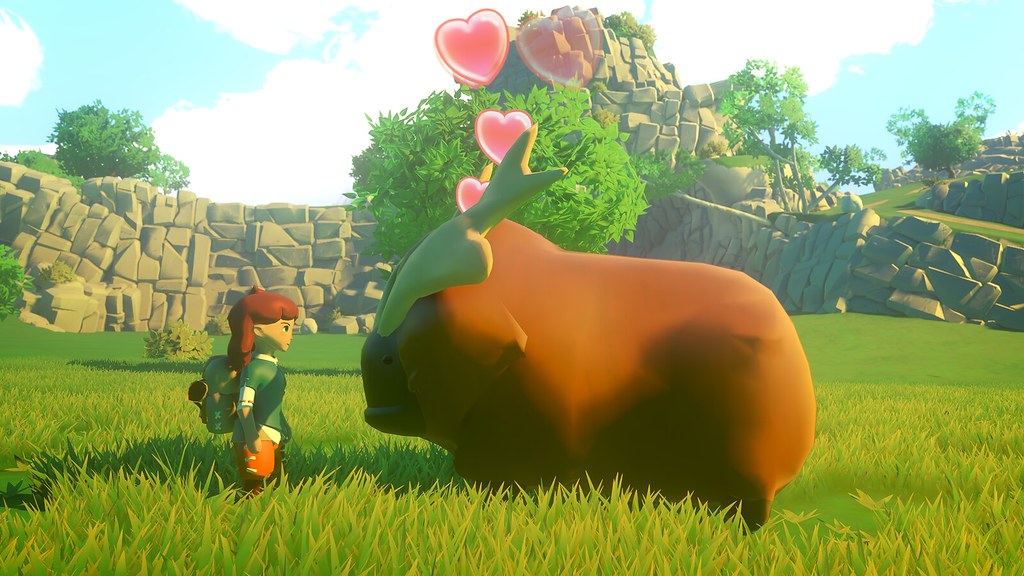
This is one of those expansive games that may take players a while to complete depending on how they pace themselves during gameplay. I think it’s worth the time to explore Yonder in this world.

Yonder is available on PC and PlayStation 4.

Leave a Reply

Your email address will not be published. Required fields are marked *

Related Post

February 2009: Dexter Game For iPhone and PCFebruary 2009: Dexter Game For iPhone and PC

As a huge fan of Showtime’s Dexter, we’re excited (afraid?) to hear they’re making a game in its image. We actually pay for an Amazon Unbox because we’re too cheap to buy Showtime for all their other shows. A Dexter game could be killer on the PC and iPhone.

Obviously the first problem to concern ourselves with is the franchise name, all too often we end up with ‘branded’ named games that produce awful results. It’s easy to get lost in the idea of making money on the name Dexter than putting in the time to a quality game release.

There is a high probability a Dexter game is going to suck, but we can hold up our hopes they do the franchise justice and create something scary but entertaining with a good storyline. How else can you represent a TV series in which the main character is a serial killer and he justifies his killings?

(Thanks, Joystiq)

Gaming FlashBack: Baldur’s GateGaming FlashBack: Baldur’s Gate

Baldur’s Gate isn’t too old, it was released in November of 1998, but that’s still a bit dated now. The gaming industry isn’t friendly to the years, often working in what seems to be accelerated “dog years” in terms of technological advancements. It figured this was worth covering because it’s one of the best selling and considered a top tier single-player RPG by most accounts.

It was also developed by BioWare, who, at the time, only had one other game under their belt from two years before called Shattered Steel.

The story begins just after a devastating event in the Forgotten Realms D&D campaign called the “Time of Troubles.” This was a great twist in the standard D&D campaign, it caused all curative magic (clerics) to lose their ability to heal unless near their deity, magic didn’t function correctly (I believe this is where the Wild Mage came from) and was unpredictable and gods walked the earth as mortals which caused magic to, in effect, die while the gods were away. Since the storyline starts slightly after this event, the game contains healing and magic but the storyline is impacted by prior events of course, people have trust issues.

The game was made great because it held “mostly true” to the 2nd Edition D&D roots so the learning curve for D&D player’s wasn’t so rough; some things were adjusted to handle the real-time effect of a video game RPG. You could party with up to six Non-Player-Characters (NPC’s) whom would swap in and out of your active party over time as part of the storyline (something also implemented by the US release of Final Fantasy 2).

(more…)