
Community Expands: Team Fortress 2 Has a Blog

The Internet has given us a communication mechanism which allows developers to better understand their audience. You can use community sites to market your content and your brand but you can also use them to better understand your market and bring your strageties and progress to your fans.

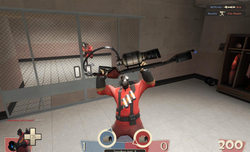
Valve Software has taken their latest successful franchise title Team Fortress 2 and followed it up with a website or “blog” which can keep their fans “in the loop.” Teamfortress.com will, no doubt, be the launch pad for much hype, community offerings and up-to-date news about the TF2 game and any updates.

“Now that we’ve settled into regular releases of content, we’ve found ourselves wanting a better way to talk directly to the TF2 community about the state of the game and some of the reasoning behind the choices we’re making. Our hope is that this blog will accomplish that, and give everyone some better insight into our development process as well.” (teamfortress.com)

Now, there is a great chance Valve will use their new launch pad to talk about upcoming games and lead you to demo’s and downloads to the TF2 title; they already link to the valve store to purchase the game. But, blogs bring in users searching for fresh content about the game and give official word to kill any bad rumors.

Call it marketing, call it journalism or developers notes, there is nothing wrong with having one more resource which represents the voice of Valves TF2 development team. Congradulations guys!
Leave a Reply

Your email address will not be published. Required fields are marked *

Related Post

VGRT Gaming Podcast 217: Pre-E3 ShowVGRT Gaming Podcast 217: Pre-E3 Show

The TD Gaming Podcast and Videogame Roundtable merge, as Jonah Falcon introduces VGRT regular Jordan Lund to his new listeners, as the VGRT Gaming Podcast is born.

The podcast is a little rushed, however, as E3 approaches, giving the duo only some time to discuss the eventful past week, which includes the following news:

For this podcast, this Question of the Week is, “What game do you want to learn about the most at E3” Of course, by the time the next podcast is launched, that question will probably be satisfied. As for Reader Feedback, we didn’t have time to answer it, but we will respond to it next week!

Episode 256: AAAA ExperienceEpisode 256: AAAA Experience

This week’s Gaming Podcast gets down and dirty, with plenty of AAAA goodness. The Darkness II contest is still going on this week, and winners will be announced next week.

In the meantime:

  • Analyst predicts 66M iPad sales in 2012
  • Diablo III gets May 15 release date
  • Epic: Next gen console launch titles will probably use Unreal Engine 3
  • Microsoft looking for executive producer to work on an “AAAA” Xbox title
  • Wasteland 2 aiming for October 2013 release date

All that, plus Reader Feedback.

Evolution of RPG’s – Gamers Don’t Want an End?Evolution of RPG’s – Gamers Don’t Want an End?

I remember a day when old RPG games had either a level cap or a definite ending. From Pool of Radiance to Secrets of the Silver Blades to Final Fantasy the game had a final boss or stage and often had some type of level cap. Today, gamers don’t want it to end, they’d rather have the option to wonder around aimlessly or completing minor quests in order to soak up every ounce of money they spent on the title.

linkNow even Bethesda is saying “we’ve learned our lesson” from the whiplash of ending their game title and capping levels. Gamers want to go back and re-try content they missed, they want to run side quests and talk to everyone in the world they want to grind themselves to über powerful levels and become a god in their fantasy world. Can you blame them?

You can’t really blame them for wanting to maximize the content, although it’s slightly more evolved than RPG’s of old. Perhaps it was World of Warcraft and other MMORPG’s that brought us to the stage in life where we all want to squeeze every last RPG dime out of the title. As a kid I wondered the world of Hyrule and covered every tile of graphical color, burned every bush, bombed every stone looking for all the content. However, even Zelda had an end with scrolling credits – you didn’t just land on a platform with your master sword and a dream.

Other titles have used level caps to limit you and draw you into the next release of the game. This was popular in the D&D world because the game is designed to target specific levels of difficulty. They may only allow you to gain level 10 because the enemies are no tougher than level 13, allowing the challenge to be good but not overwhelming. If they allow you to get to level 50 they’d have to design the game so all the enemies grow powerful along with you — that’s not always a desired result.

Final Fantasy is a popular franchise that typically allows you to grow infinitely powerful depending on how much time you want to spend repeat killing the same enemies. Gamers aren’t always into the grind, they just want to grind “enough” to make the challenges a little more do-able.

Today, however, with larger storage capacity, larger development teams and the desire to build more value into your gameplay experience titles have dozens of side quests and sub-plots that are totally optional. The result of so many sub-quests results in a player who is much more powerful at the end of those quests compared to a player who sticks to the narrow path of the main plot. So, games much grow dynamically challenging to keep the fun per dollar high.

Do you like your RPG’s to have a definite end and a high but capped level?