
 It’s clear publishers like Electronic Arts hate to take risks on video games. They’re not alone in their opinion, look how many sequels we’ve got for the holidays compared to new creative titles like Little Big Planet, or how publishers push out sequels to hot titles until we can’t take it anymore; how many Guitar Hero titles will arrive before we scream “enough!”?
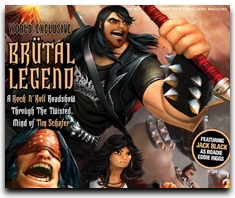
Speaking to rocking music, Electronic Arts may pass on the chance to pickup Brütal Legend, a title originally being published by Vivendi Games prior to the Activision Blizzard merger. The title was left without a home when the merger was complete along with other dropped titles.
Why would EA not take the chance with the game? Risk factor. Brütal Legend is a game title developed by Double Fine Productions and has been designed by Tim Schafer, with past games like Monkey Island, NES’s Maniac Mansion and the fantastic title Full Throttle. With such sweet titles under his belt, why wouldn’t a game designed by Tim Schafer be a hot commodity in the market?
The game brings music and action adventure together in a creative twist. No, it’s not Rock Band and it’s not Guitar Hero, thus, MTV and Activision don’t care about it. However, the game plot and storyline are music related and, supposedly, the main character is voiced by Jack Black, vocalist of Tenacious D and popular actor (School of Rock anyone!?)
Creator Tim Schafer has said that roadies have long fascinated him. Schafer originally thought of the game’s title over fifteen years ago. “I was riding a bus, thinking about a game that would be the complete opposite of what we were working on, The Secret of Monkey Island. And Brütal Legend leapt into my head. (wikipedia)
It appears a series of publishers have walked away from Brütal Legend without much hesitation. “I have seen it,” EA CEO John Riccitiello told Gamasutra. “I am well aware of what the game is. It’s a very significant creative risk.” (joystiq)
Where would the game be without significant creative risks? In many ways, World of Warcraft was a risk… it’s only got 9 million or more players.
 In yet another “no kidding” news item, Blizzard is working on some new MMO says Paul Sams, Blizzard COO, in an interview with