
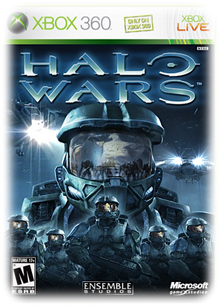
Ensemble Studios To Close, Halo Wars Future Not In Question

Ensemble Studios, owned and operated by Microsoft or, Microsoft Games Studios, has been targed to be dissolved. All employees will find new homes, a large quantity will start a new studio and continue maintaining the later released Halo Wars franchise.

Microsoft has chosen to close the studio as part of their growth plan of Microsoft Games Studios much like FASA was closed in the past. The difference, there is a new landing point for Halo Wars unlike the uncertain future of Shadowrun.

Commenting on the reason for the closure, Microsoft said, “This was a fiscally rooted decision that keeps MGS on its growth path. While the decision to dissolve Ensemble was not an easy one, Microsoft is working to place as many Ensemble employees who do not move to the newly formed studio into open positions within Microsoft as possible.” (gamespot)

Ensemble Studio’s folks will continue to work with Microsoft and will continue to support Halo Wars after its launch. It is important to stress their statement of continuing to support Halo Wars, there is no need to think the project will be done half-assed or without pride as the project will live on with a different studio name.

The only question is… what is causing Microsoft to close down studios with actively working real franchise projects? FASA went down, Bungie was let go on their own and now Ensemble Studios? There has to be something going on here… idea?

0 thoughts on “Ensemble Studios To Close, Halo Wars Future Not In Question”

Leave a Reply

Your email address will not be published. Required fields are marked *

Related Post

Australian PSN Restoration DelayedAustralian PSN Restoration Delayed

The Japanese government has not allowed PlayStation Network to be activated for Japanese gamers yet due to security concerns, and now an expert is advising Australia to follow suit.

Professor Bill Caelli told newspaper The Australian, “Why is it that in the IT industry enterprises certify themselves?” said Caelli, noting that PSN didn’t have the same restrictions, and added that the public has “no way of assessing the assurances given by the owners of the (PSN) system themselves”.

Reportedly, Australian privacy commissioner Timothy Pilgrim has been in contact with Sony, and has not judged yet whether Sony has given them enough information to restore PSN. His investigation will be an ongoing one as well, even after PSN is restored.

When it was discovered user information had been stolen during the PSN breach, the Australian federal government announced plans for a law forcing companies to disclose privacy breaches, although it was unclear when it might come into effect. Privacy minister Brendan O’Connor had stated:

“Sony isn’t alone. We’ve seen serious privacy-related incidents in recent months involving other large companies. All companies that collect customers’ personal information must ensure that the information is safe and secure from misuse.”

We’ll stay on this story as it develops.

Episode 264: This Podcast is DRM-FreeEpisode 264: This Podcast is DRM-Free

This week is full of gaming goodness as E3 slowly creeps up like kudzu, but there’s still plenty to talk about this week. For one, the Gaming Flashback is the classic Infocom game Planetfall.

The news for the week:

  • DICE has Frostbite-powered titles for 2013 that “will require a 64-bit OS”
  • Actors confirm return to recording booth for Mass Effect 3
  • CD Projekt RED: The truth is DRM does not work
  • Potential $1 billion suit against EA by former student-athletes moves forward

All that and Reader Feedback. This week’s Question of the Week, “Have you ever wanted a game but didn’t buy it due to DRM?”

Sony Says Competition is GoodSony Says Competition is Good

It seems the console maker who’s trailing in sales typically says how great competition is and how it’s great for the consumer. Sony’s not leading the console race, as of now, and Sony Computer Entertainment Europe president David Reeves stated in a recent interview:

The winner, he said, is the consumer. “That’s why we are not going to slag off Microsoft or Nintendo at all,” he said, “because again it’s rather like the trainer market: one year it’s Reebok, next year it’s Nike, and then suddenly it’s Adidas; it’s cyclical, but in the end everyone wins in five to ten years.”

Sony continues to speak towards their “10 year plan” and how they’re increasing momentum in the market. They’re not winning in sales but with a ten years to go, this is just the beginning. Had this statement come from Microsoft it would be a chance to worry, but Sony has proof to backup their statements.

The PlayStation 2 is going strong as a nine year-old and doesn’t seem to be letting up in game releases. Sony’s press conferences always cover the PlayStation 2 in their talks with the PSP and PlayStation 3 for three big reasons: it’s worth bragging about, it distracts from lower PS3 sales and it separates them from the competition.

Where is the GameCube or classic Xbox in Nintendo and Microsoft’s press conferences and number crunch reports? The fact is, the companies have given up on both products retiring them as “last generation” (translation: poor sales). What better reason to buy a PlayStation 3 than knowing the company is in the game for the long haul?

It might be bit cheaper to buy an Xbox 360 but who’s to say Microsoft isn’t going to announce their next generation console tomorrow and kill off the Xbox 360? Obviously, Microsoft will deny those claims but there will always be doubt without a proven track record.

On the other hand, Microsoft hasn’t seen the success in the classic Xbox and Nintendo hasn’t seen nearly the fervor over the GameCube as compared to their current generation consoles. So, that begs the question, why would they halt all that for new console announcements?

Until they’ve had more time in the market, we cannot be 100% certain what Nintendo and Microsoft are going to do when it comes to next-generation announcements while Sony’s been very clear in each press conference. As Kaz Hirai said to Eurogamer earlier:

“We certainly don’t do the consumer the disservice of basically saying that the consoles have gone by the wayside because we have a new one. Right now, a prime example? PS2 is nine years into it. Where’s the Xbox? Where’s the GameCube?”

If one console maker is looking for a way to stand out and explain their slow sales figures, Sony’s got the PS2 and its long history in their back pocket.

Now, if we could only get those game designers to continue to take it seriously and not put all their eggs into the PS3 basket.