Gaming Flashback: MystGaming Flashback: Myst
 Myst was published by Brøderbund Software, developed by Cyan Worlds and created by two brothers that did the design and directed the game (it was, much like a movie).
The original game was released on the Macintosh (in 1993) and then later ported to Microsoft Windows and Sega Saturn, PlayStation, Jaguar CD, AmigaOS, CD-i, 3DO, PlayStation Portable, and Nintendo DS.
“Myst puts the player in the role of the Stranger, who uses an enchanted book to travel to the island of Myst. There, the player uses other special books written by an artisan and explorer named Atrus to travel to several worlds known as “Ages”. Clues found in each of these Ages help reveal the back-story of the game’s characters. The game has several endings, depending on the course of action the player takes.” (wikipedia)
The game was a success, no doubt, and was considered the best selling PC game of all time until TheSims dethroned it. Besides mind blowing graphics, at the time, Myst helped move the game and PC industry along by selling CDROM’s. The game required a CDROM, which was rare at the time, and I recall them bundling Myst with some CDROMS or hyping it as “you need a CDROM so you can play Myst.” On more than one occasion when a person game to me asking what they should get to show off their new (costly) CDROM I would say “you need to try Myst.”
The gameplay of Myst consists of a first-person journey through an interactive world. The player moves the character by clicking on locations shown in the main display; the scene then crossfades into another frame, and the player can continue to explore. Players can interact with specific objects on some screens by clicking or dragging them(wikipedia)
Franchise sales: 12-million copies (first Myst game alone in the franchise, 6-million), pretty impressive eh?
You don’t have to be a huge Myst fan to know how it changed the industry, grew the medium of CD-based games and entertained millions. A real gamers thinking game!
To hear our full impression of Myst, checkout the TD Gaming Podcast Episode 77.
Podcast: Play in new window | Download
 Most folks in the game industry are already writing off E3 as an actual event to be attending. Even Wedbush Morgan analyst Michael Pachter is calling it “virtually useless” for both retail and investors. The writing is on the wall and the reasons are obvious.
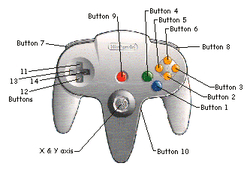 The same company that brought us the NES Advantage has proven the Wii control scheme isn’t as bad as critics speculated. The beauty of adding the “waggle” technology is limiting your button count to a reasonable level without overwhelming gamers.
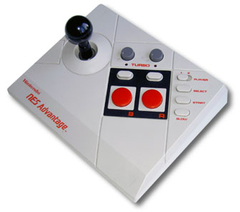 Sony took pieces of this concept in their PS3 controller and its ability to detect “tilt.” Xbox 360 stuck with the beefy controller with lots of buttons and analog sticks. Not just a D-Pad but two analog sticks and a ton of buttons to press, some pressure sensitive as well. What of our next-generation console? Maybe a few new buttons?
 In 1987, Capcom created a new winner with the Street Fighter series. Knowing the demographic, they went for teenage boys with the desire to play fighting games in the arcade in competitive fashion. But is a good fighting game without some eye candy?
 Once upon a time Rare though they had a winner; a game which would end all the confusion between a hardcore console and a kiddie console. Viva Piñata was supposed to change the way we think about Xbox 360 gaming by showing off a title that would make children feel more inclined to game on a “big boys console.”